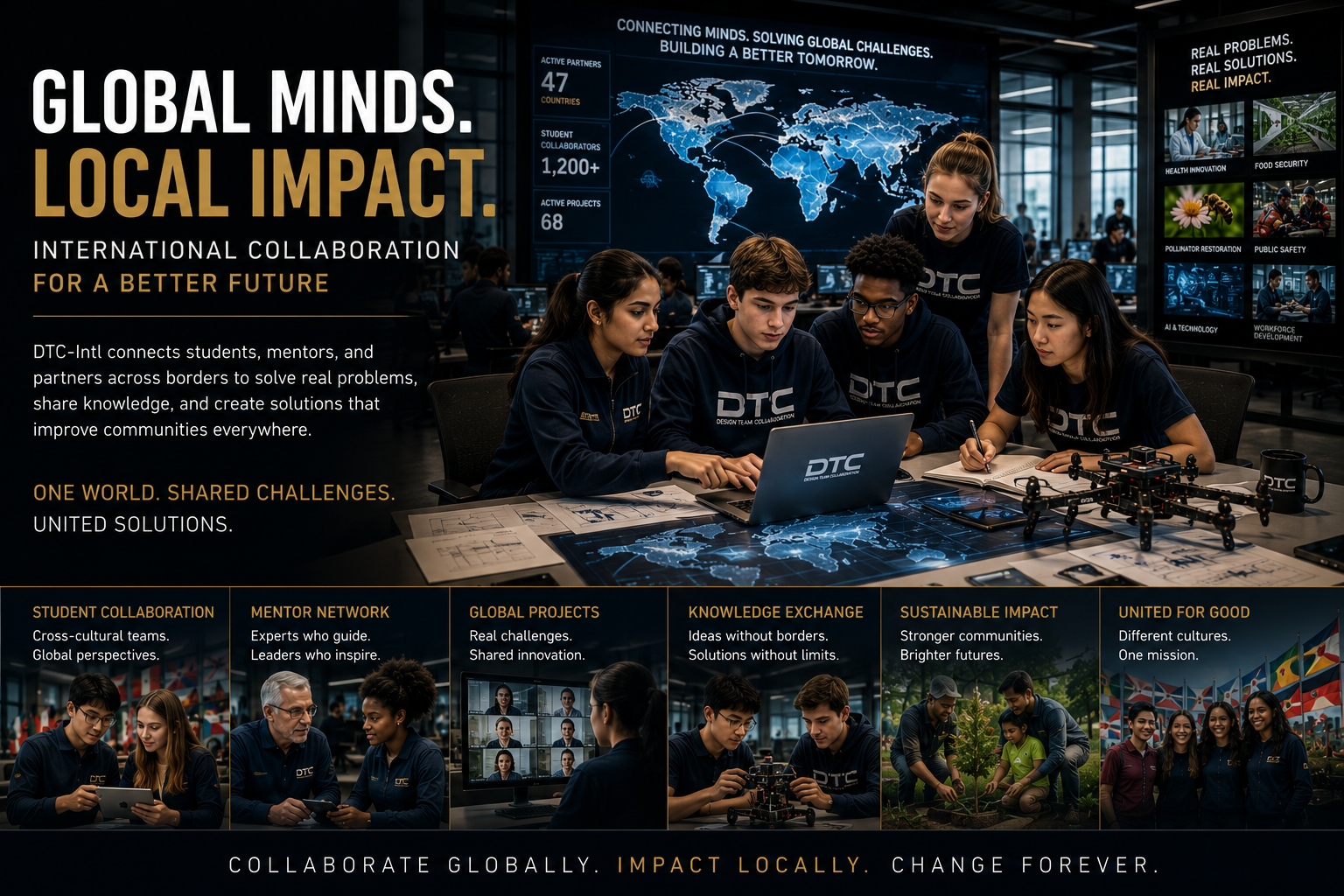
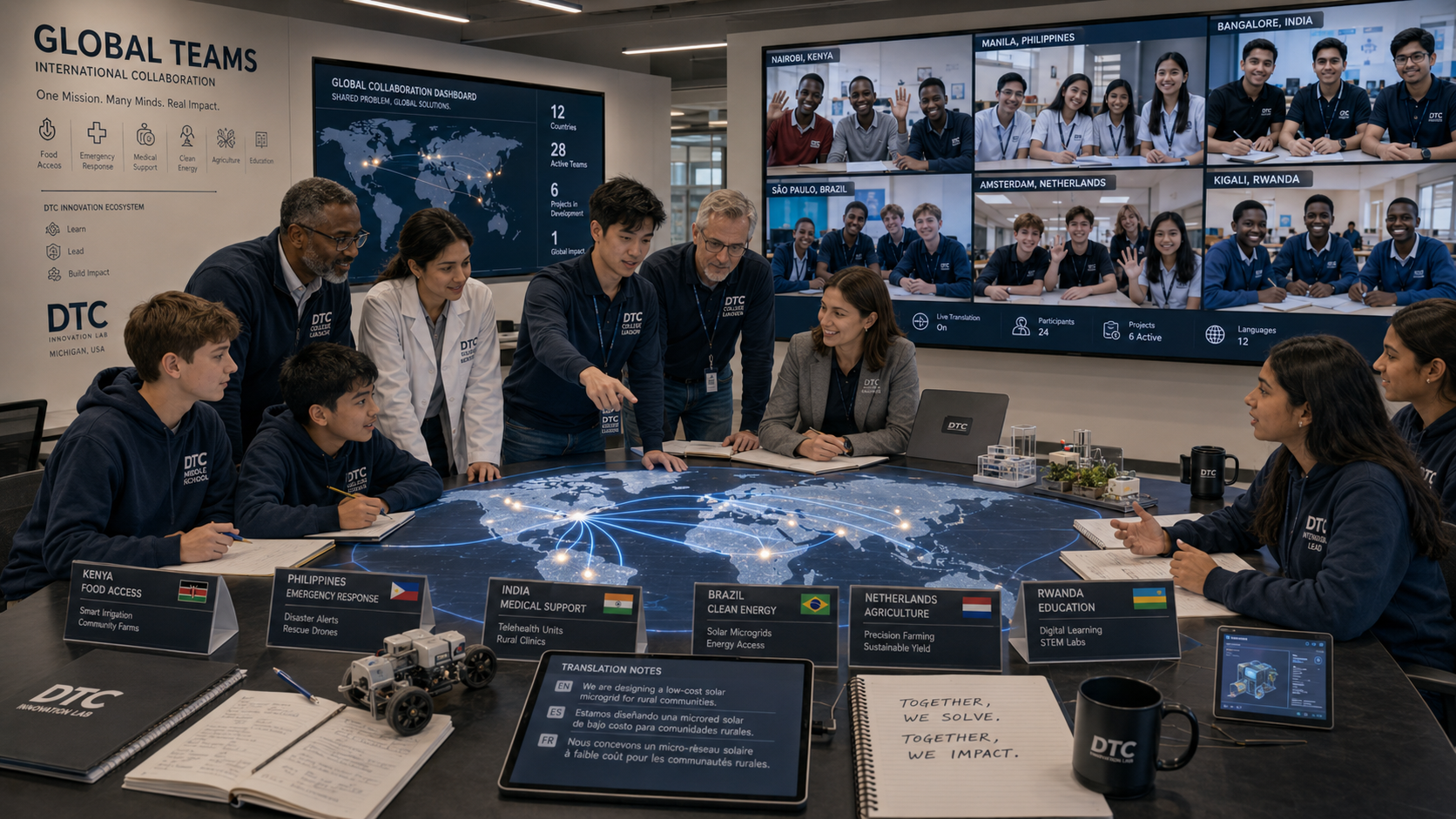
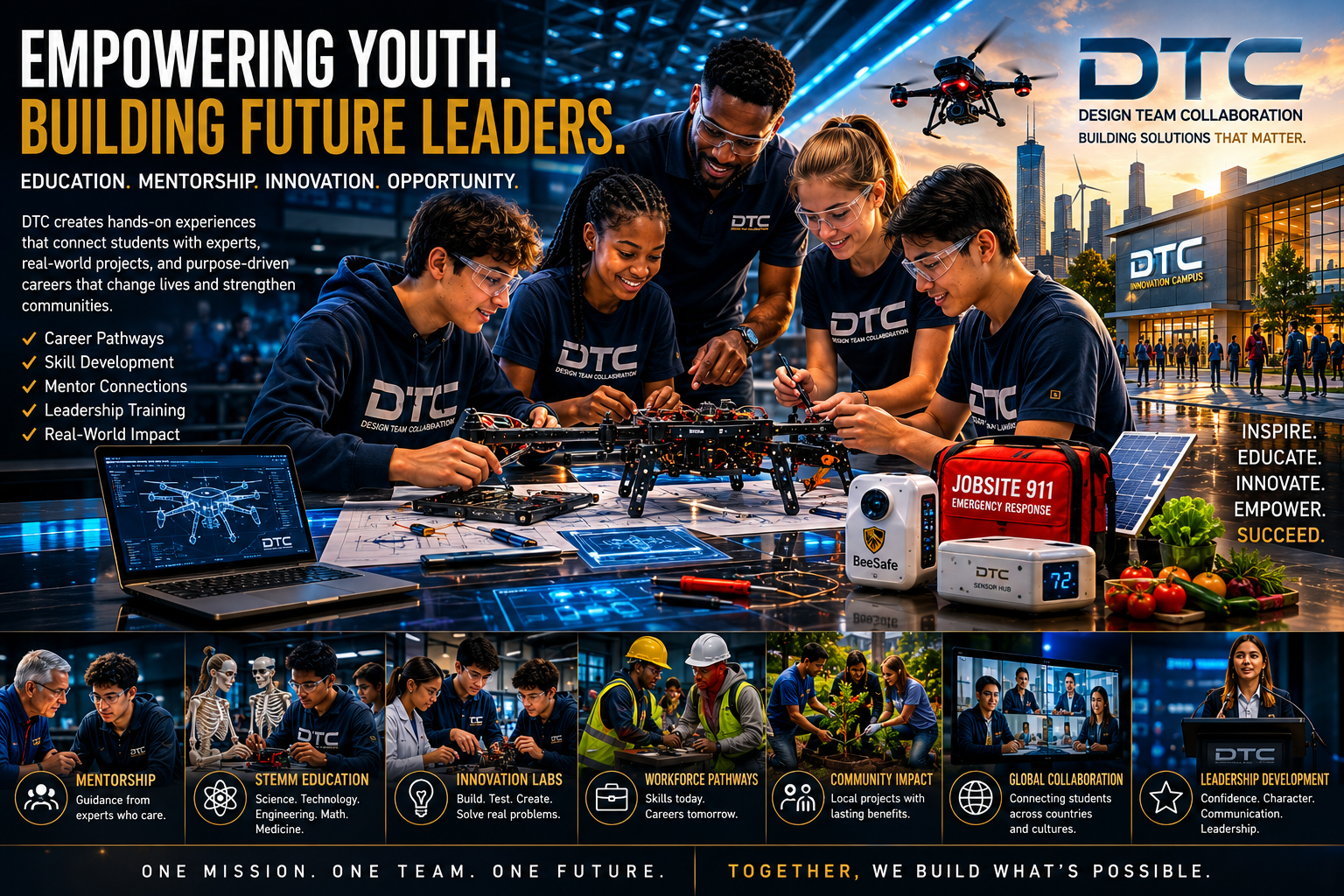
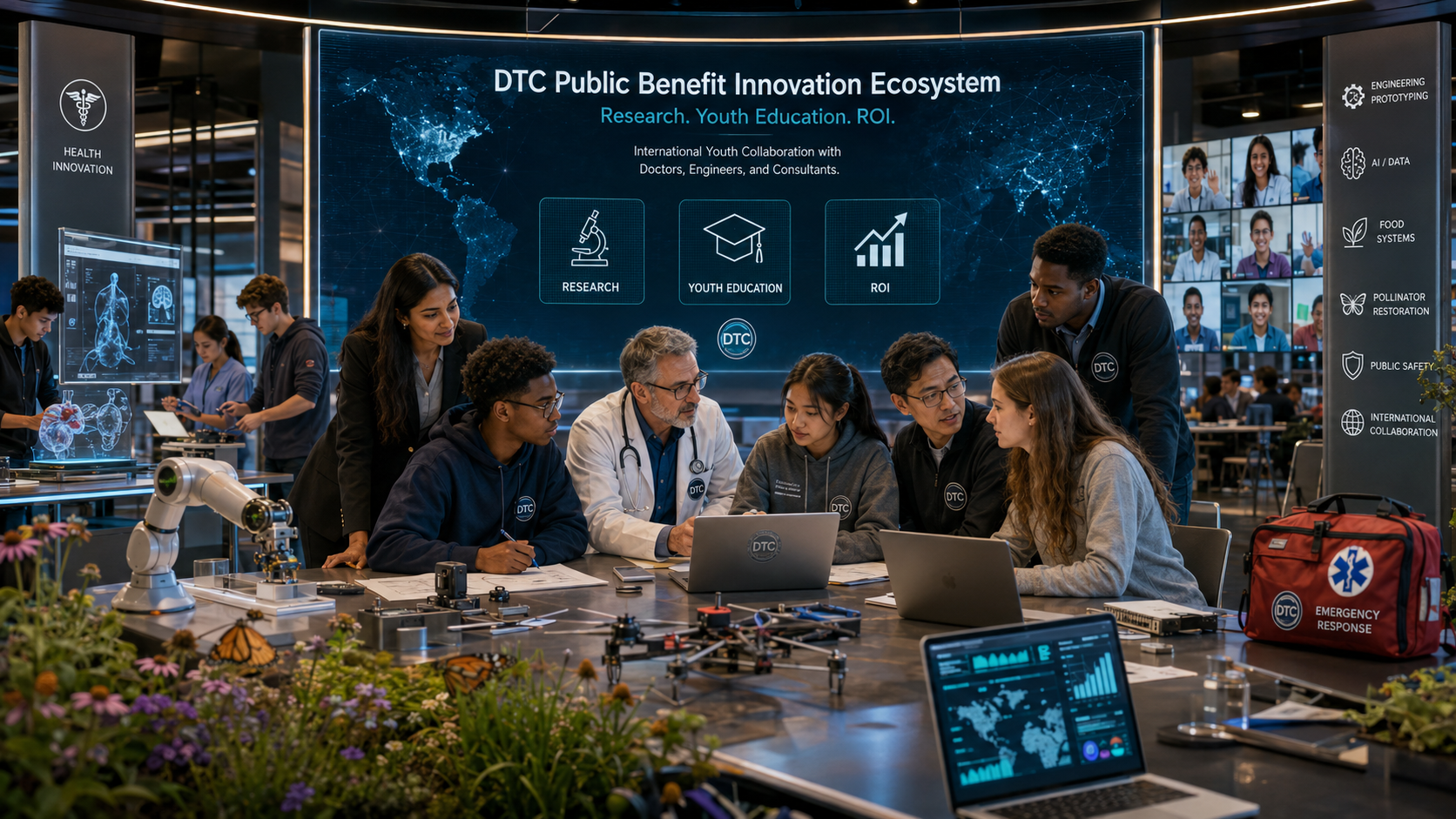
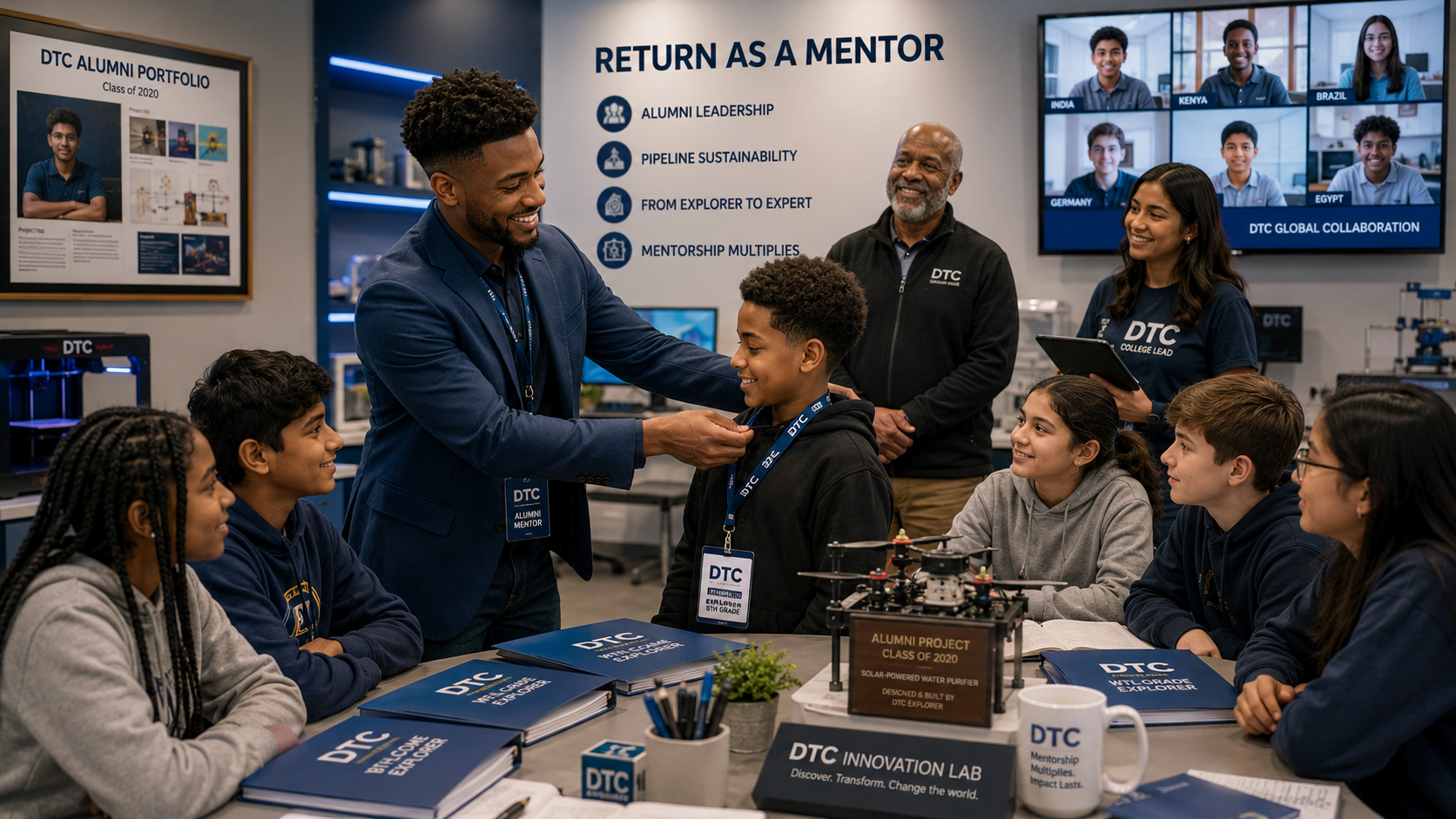
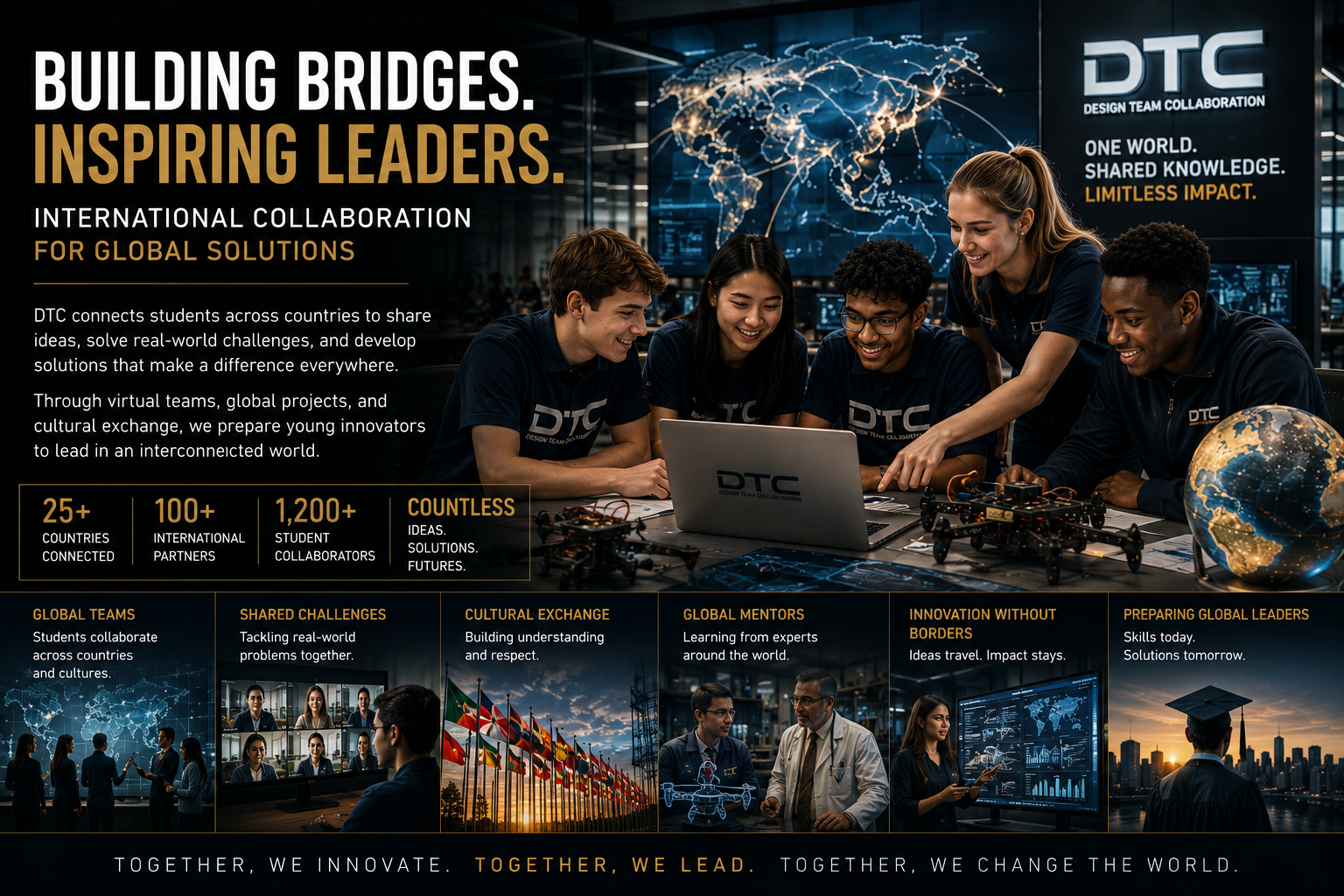
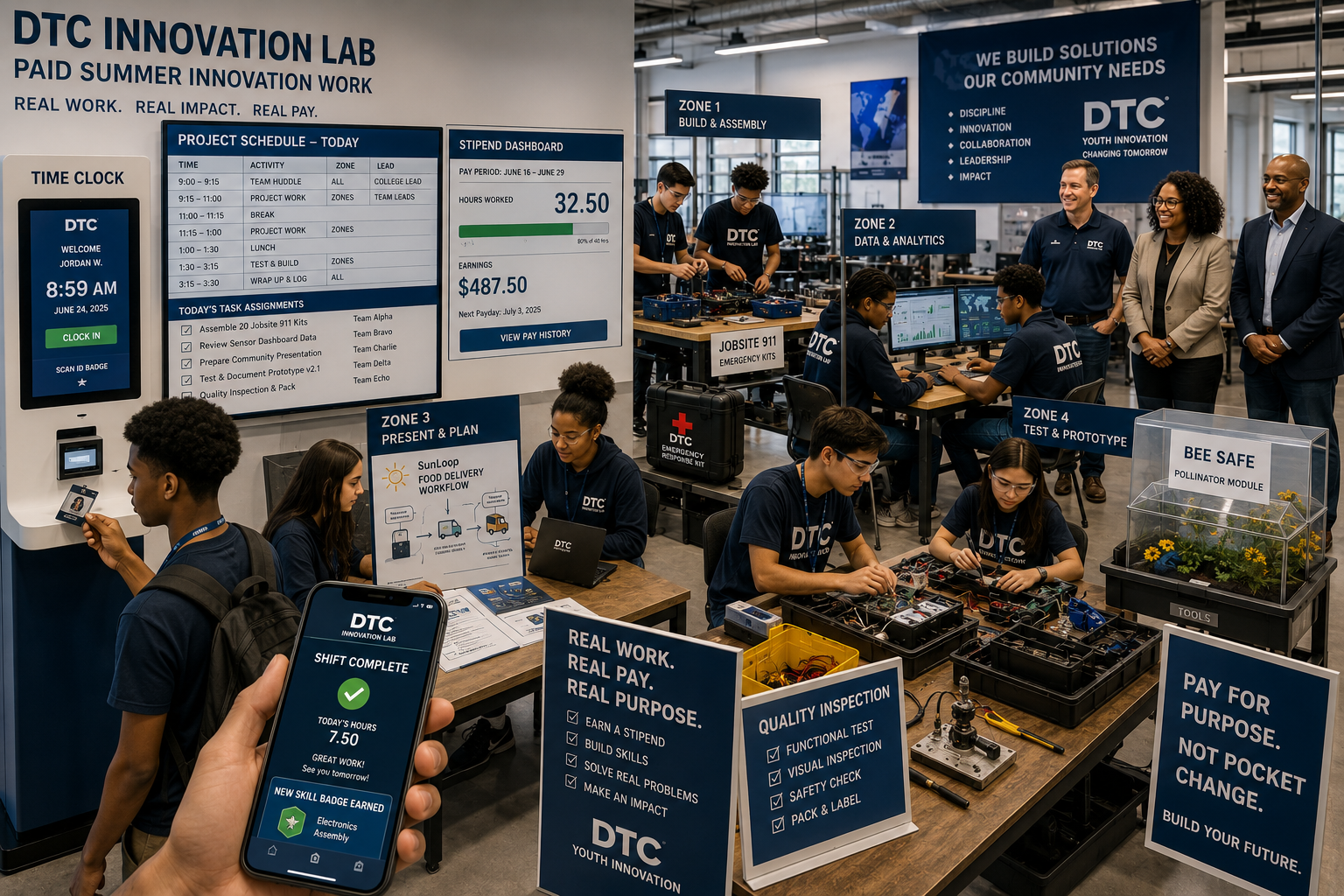
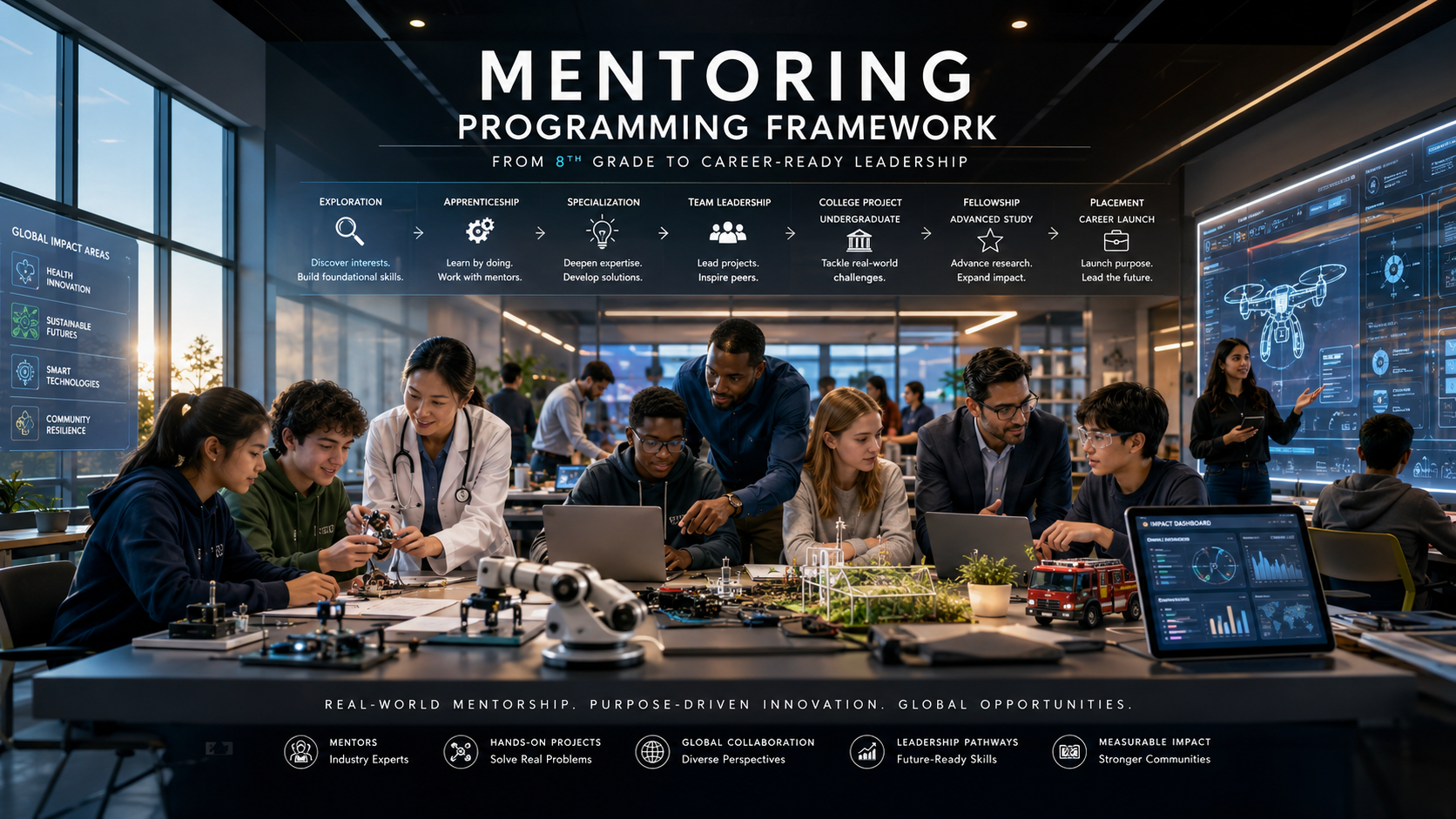
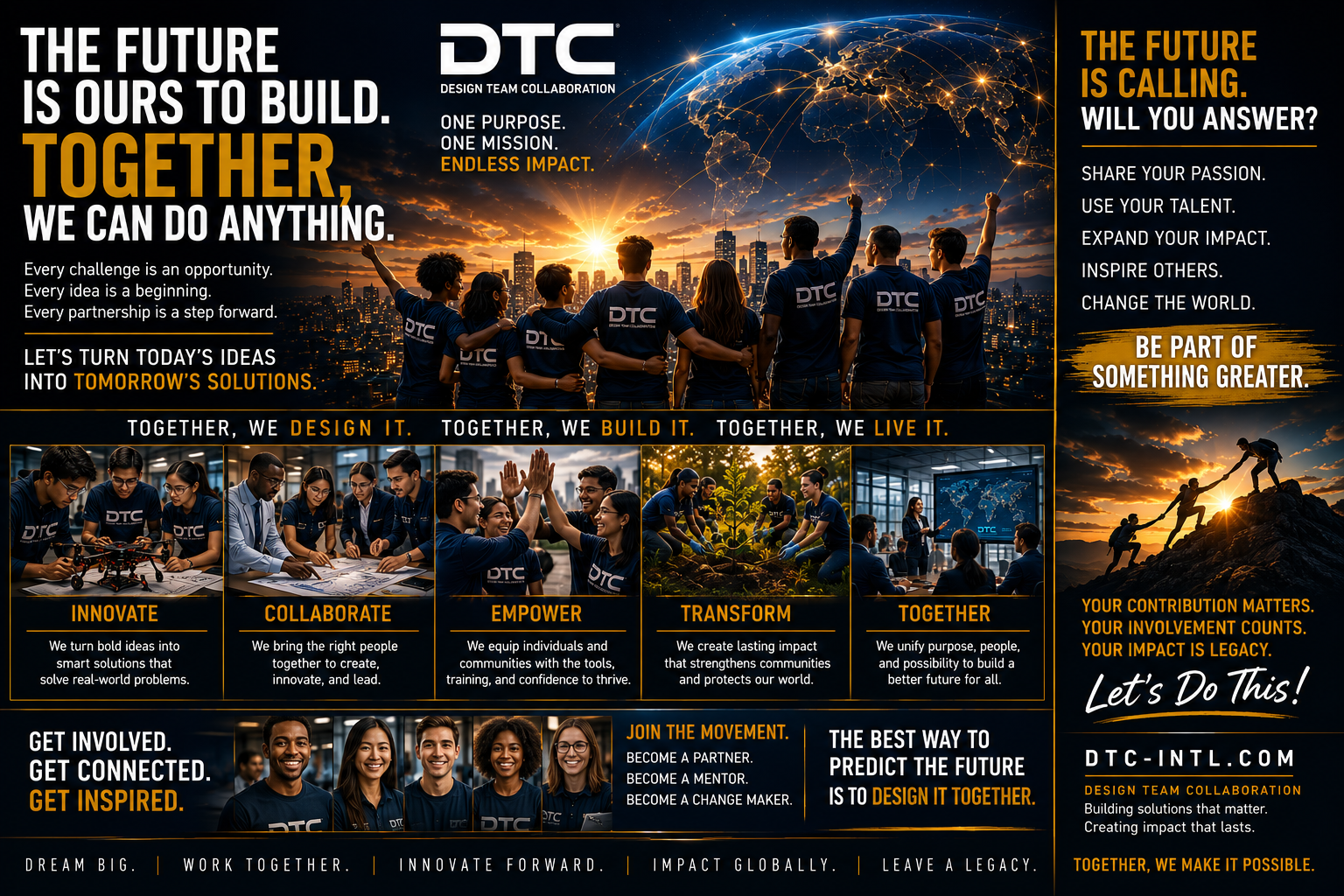
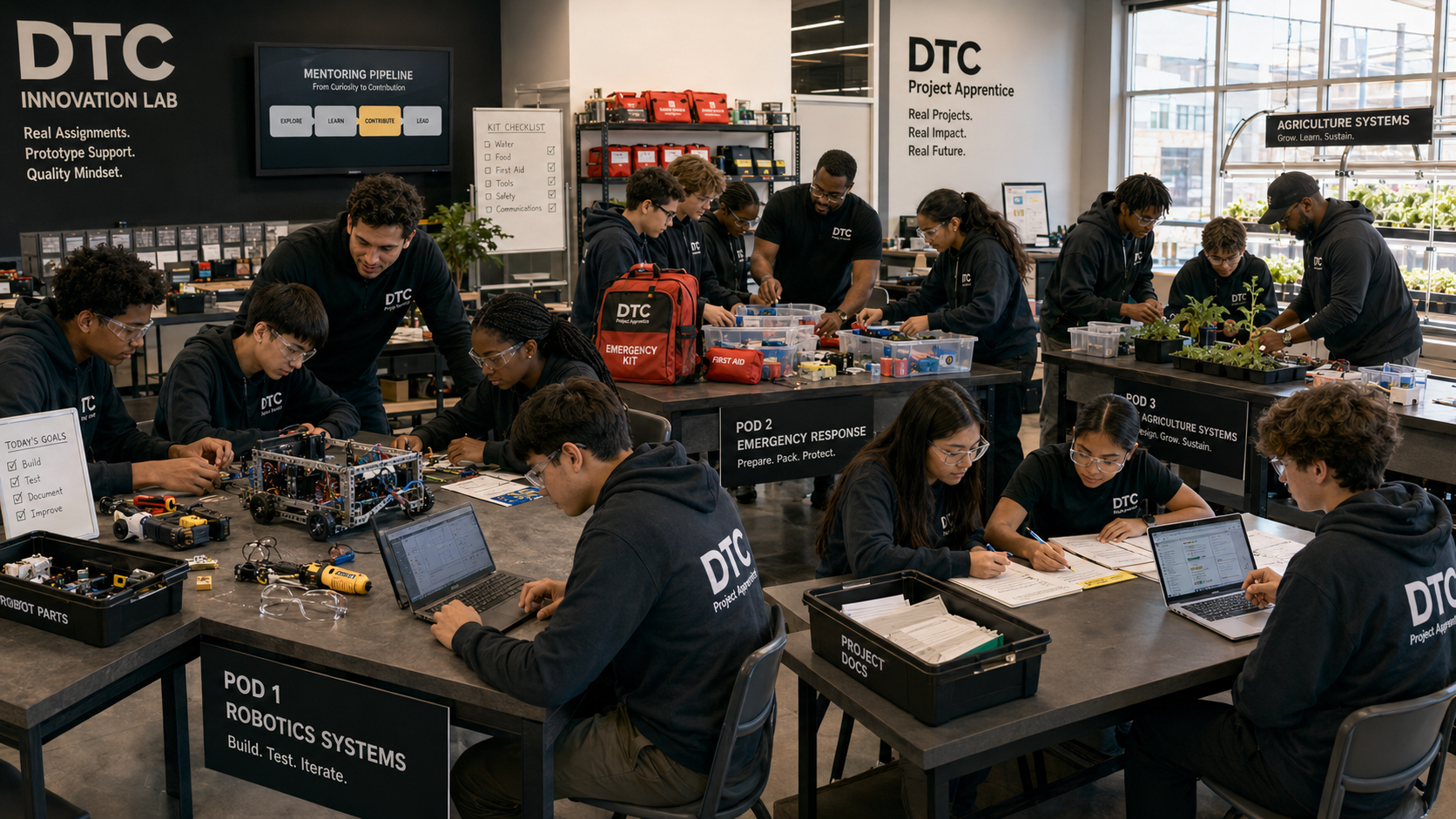
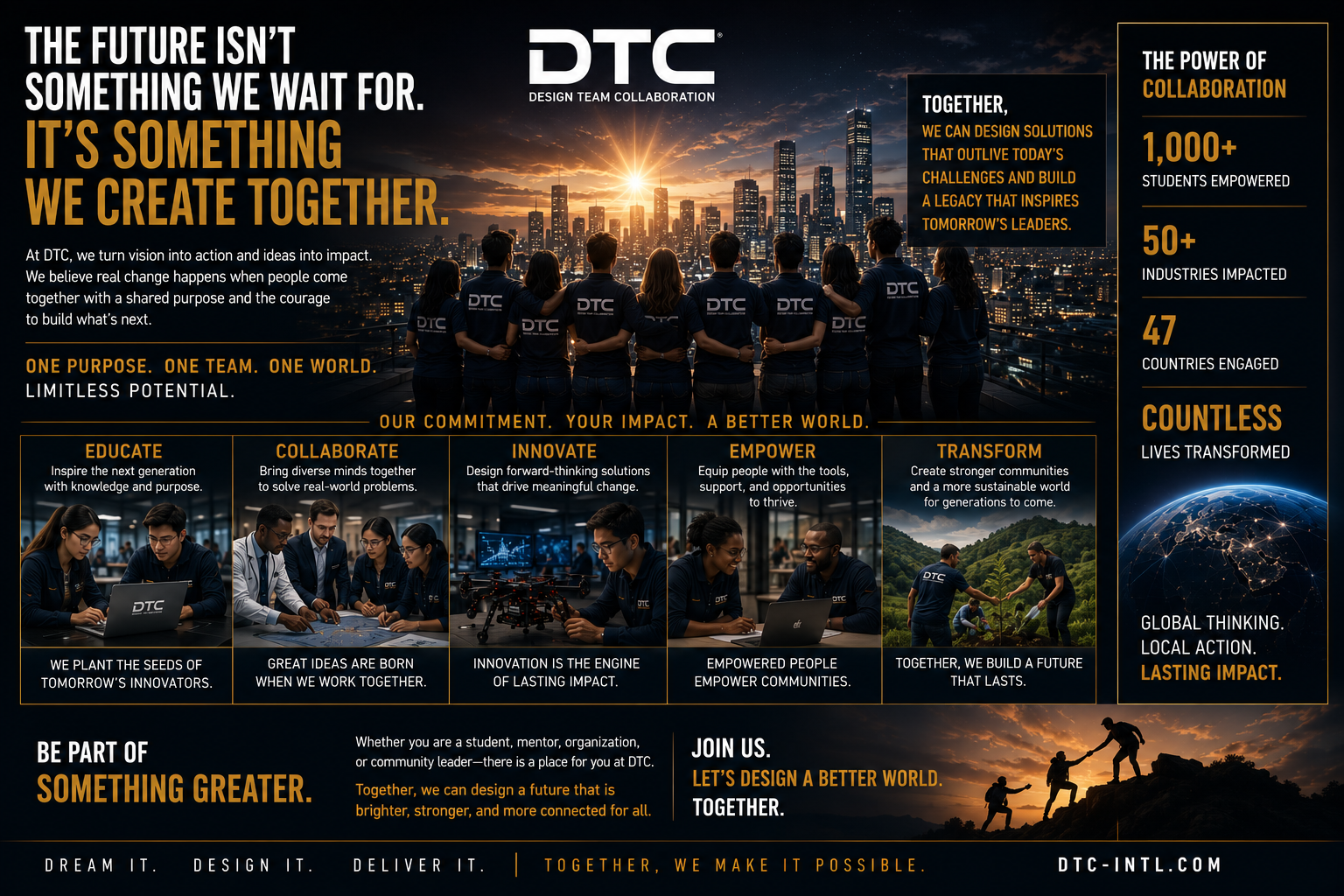
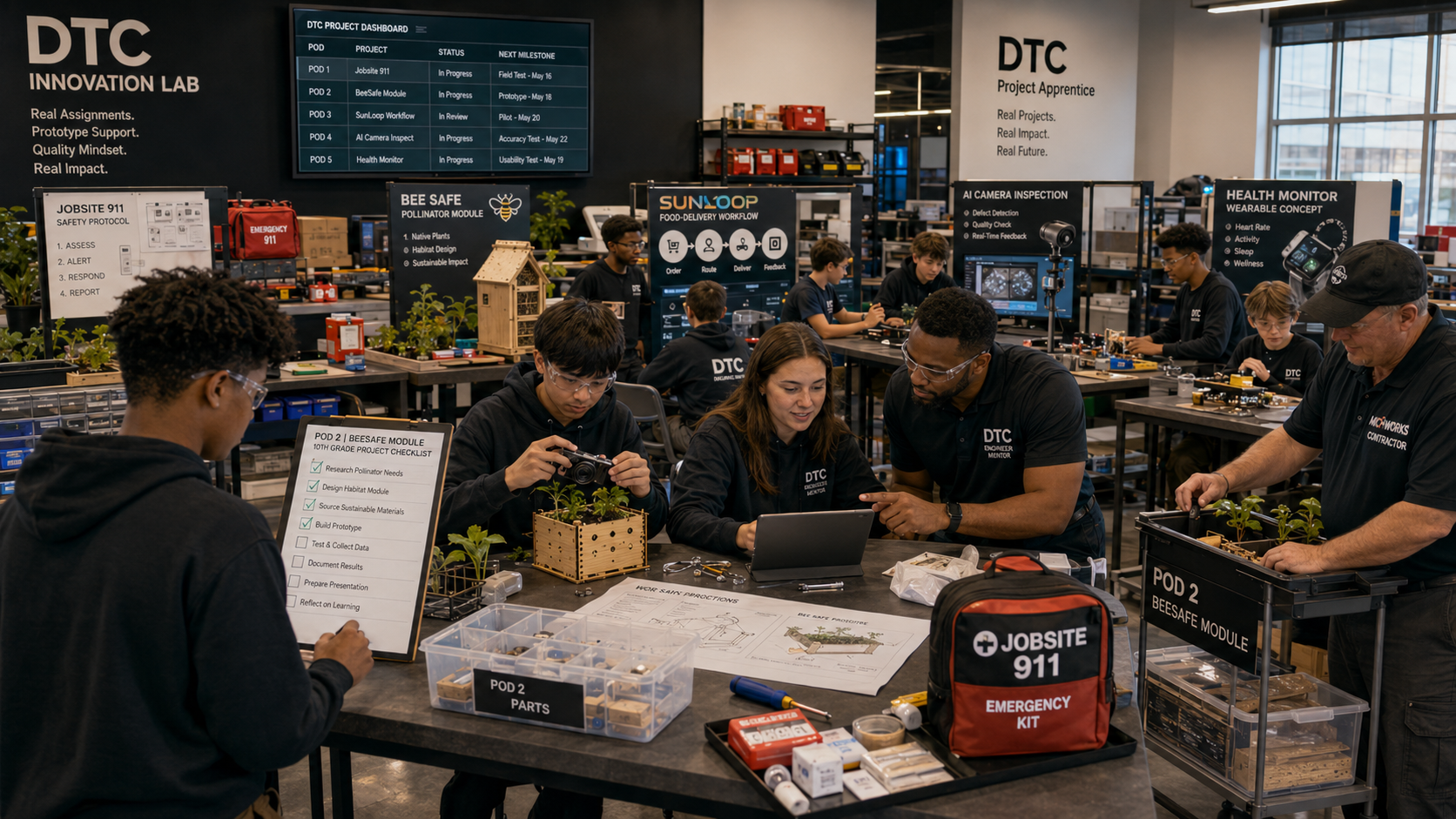
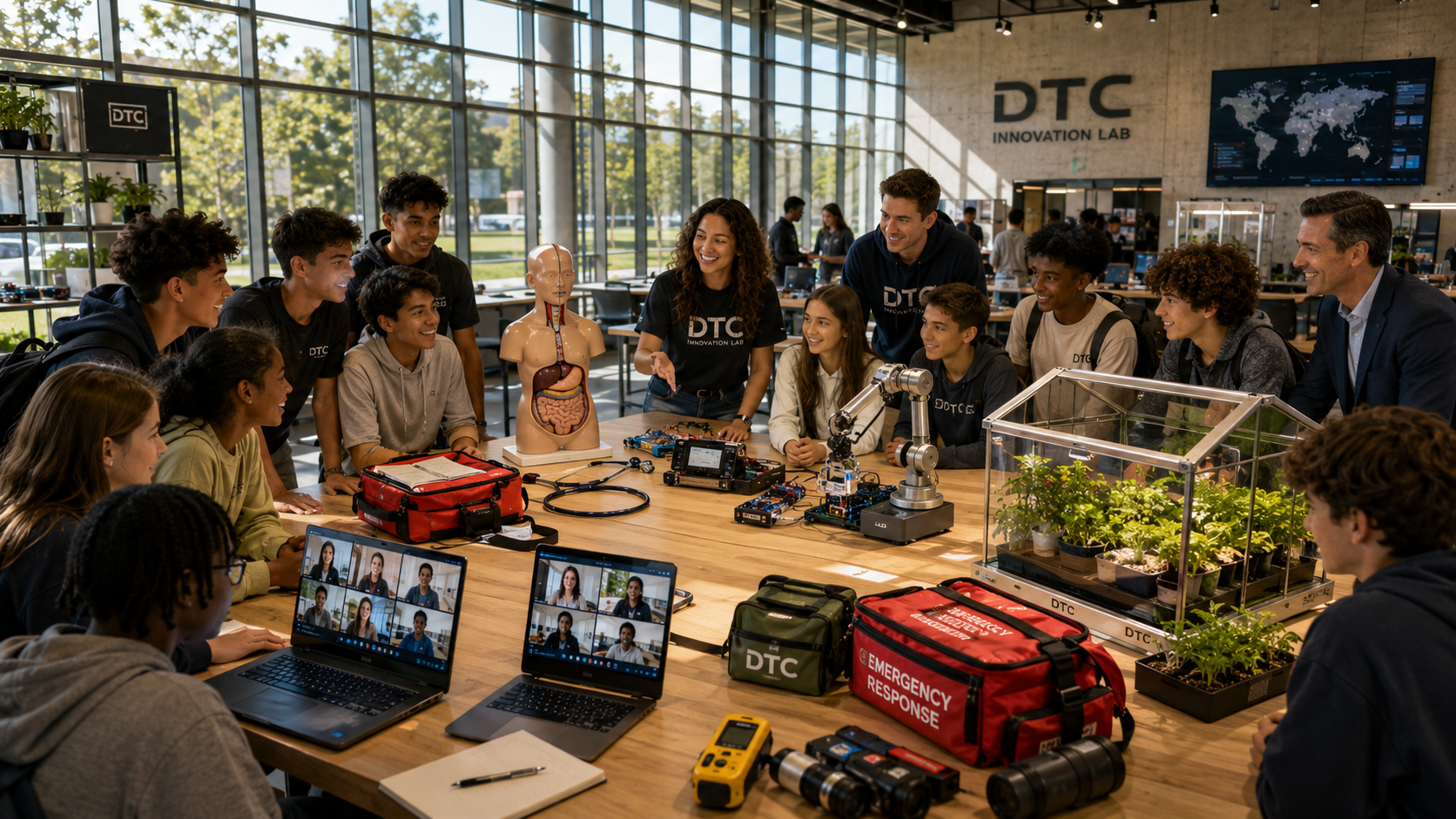
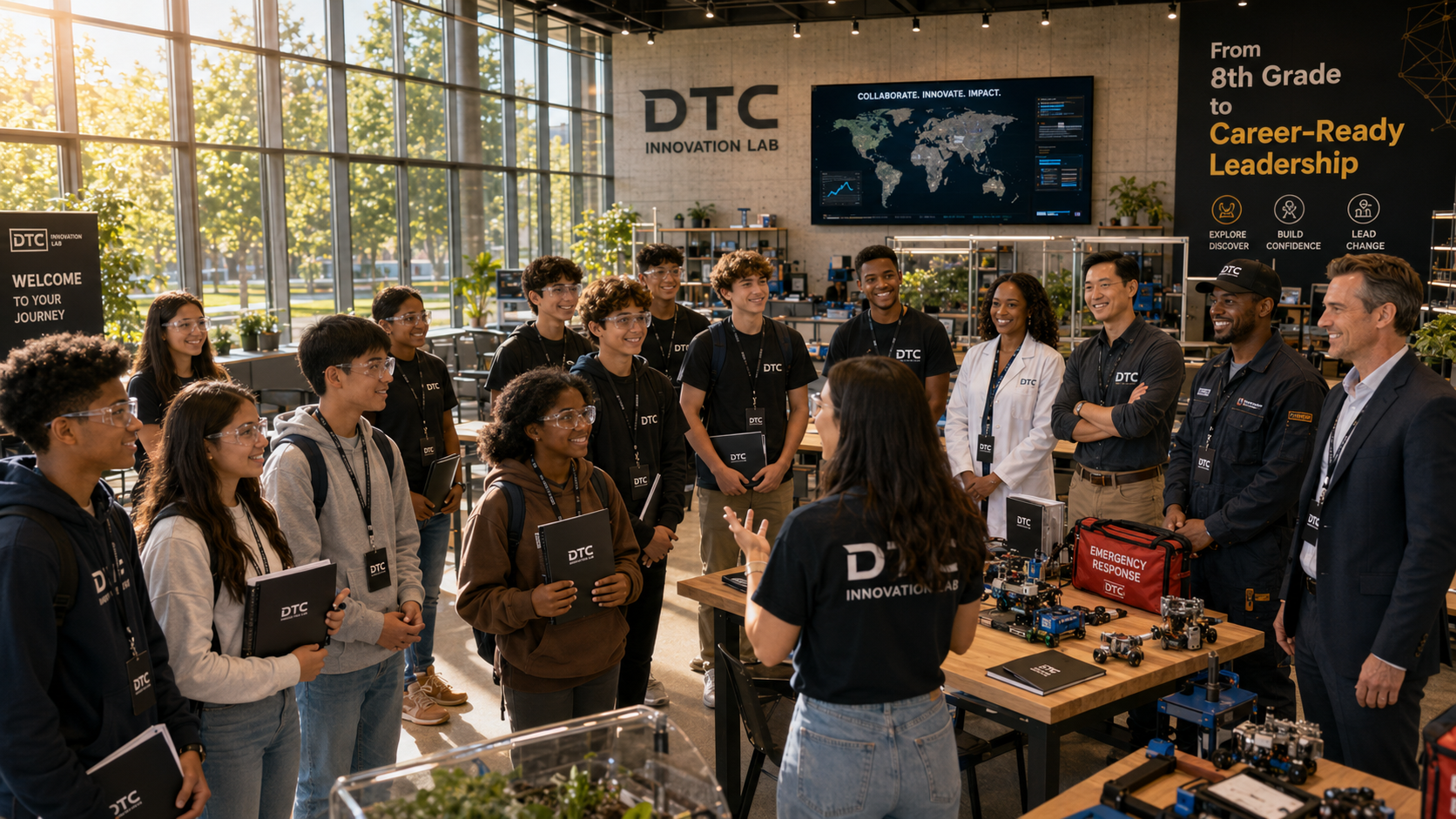
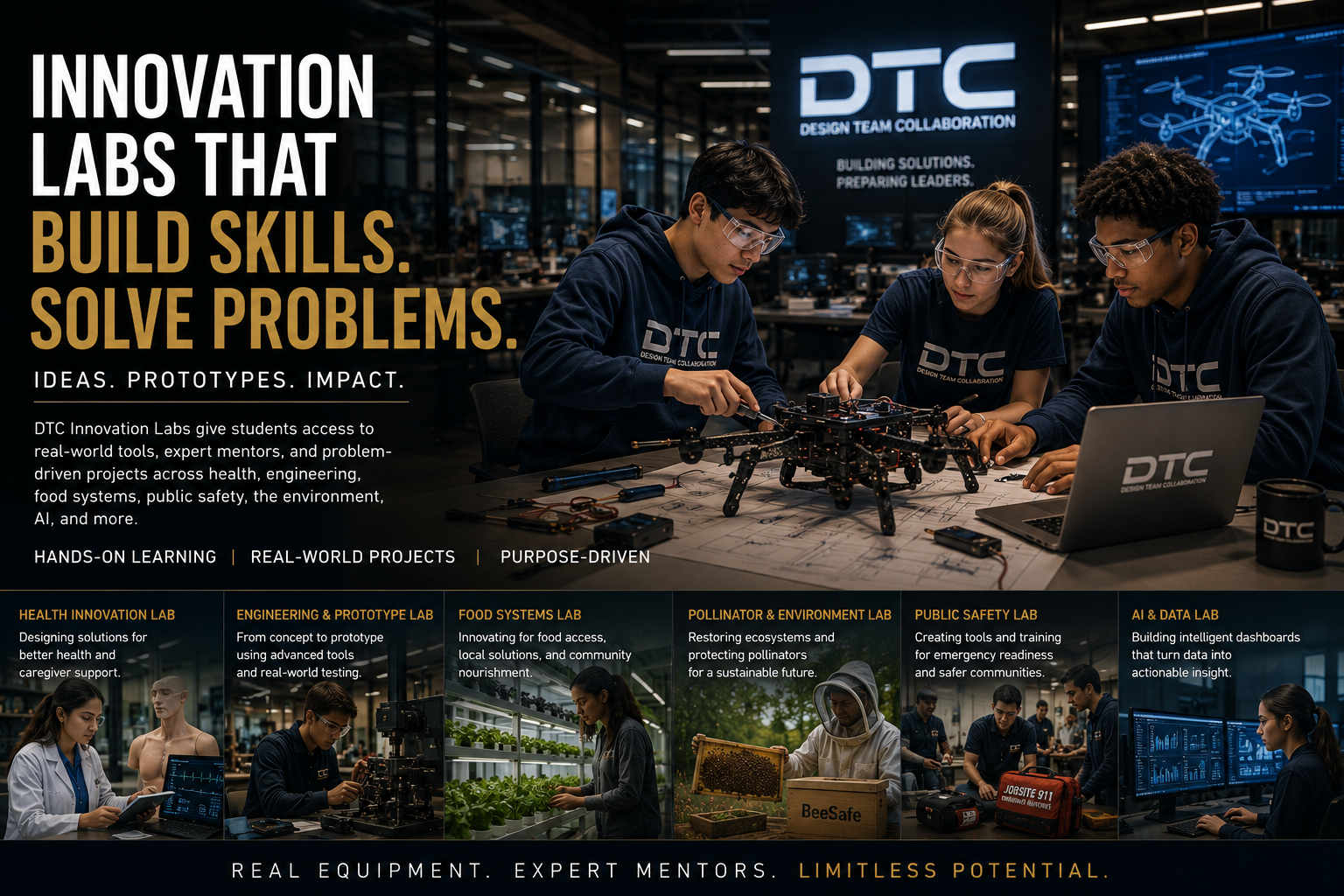
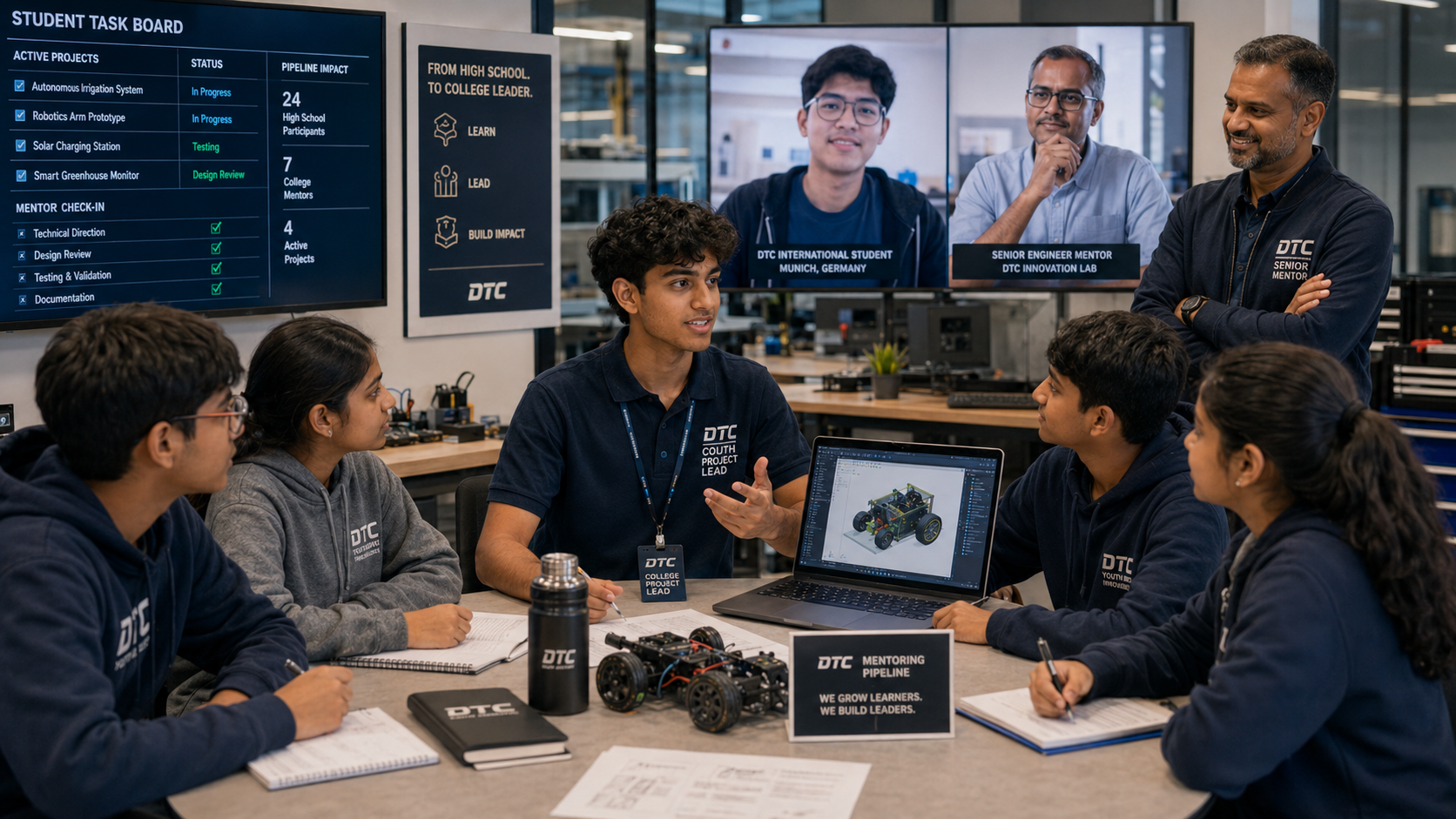
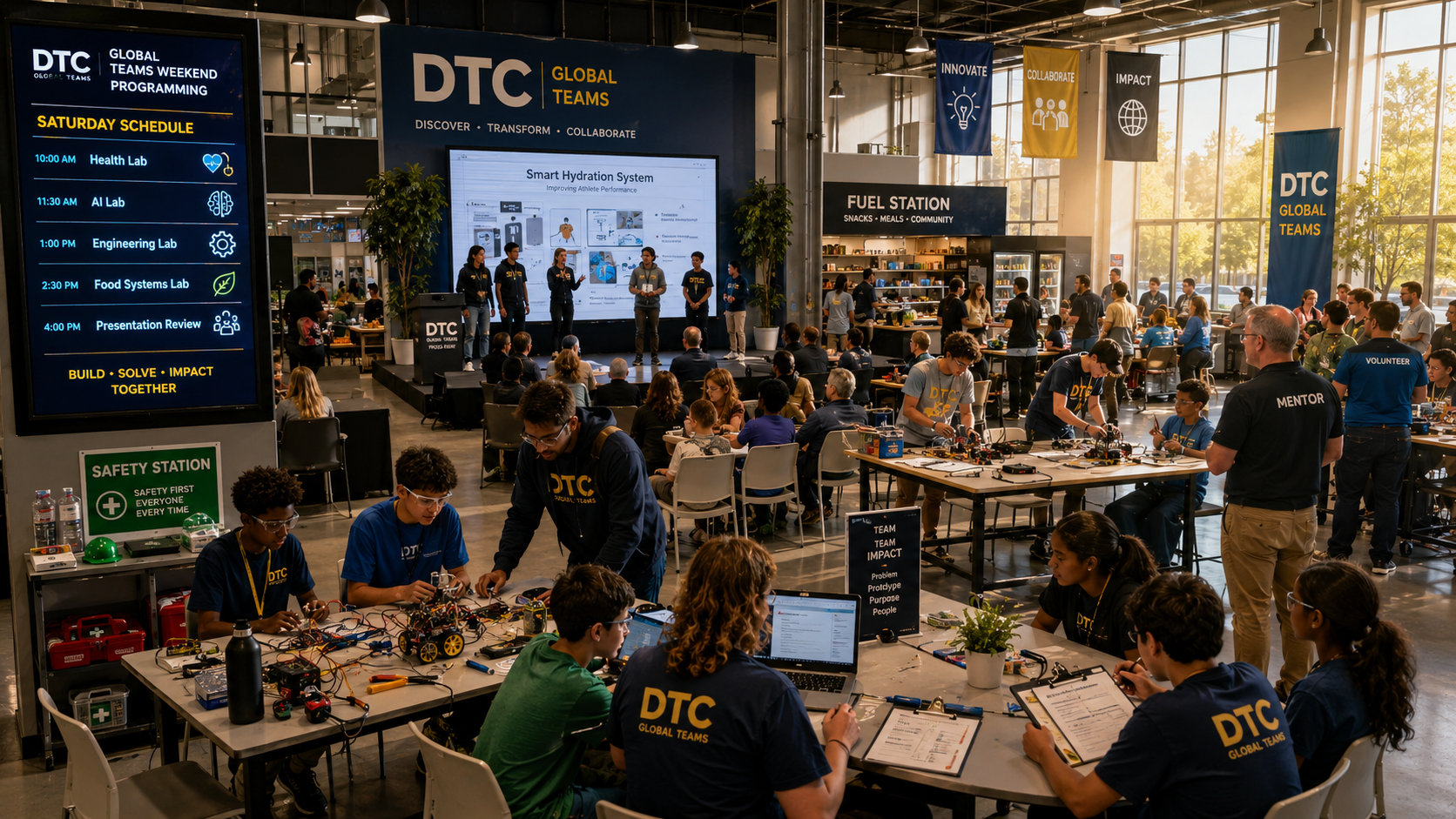
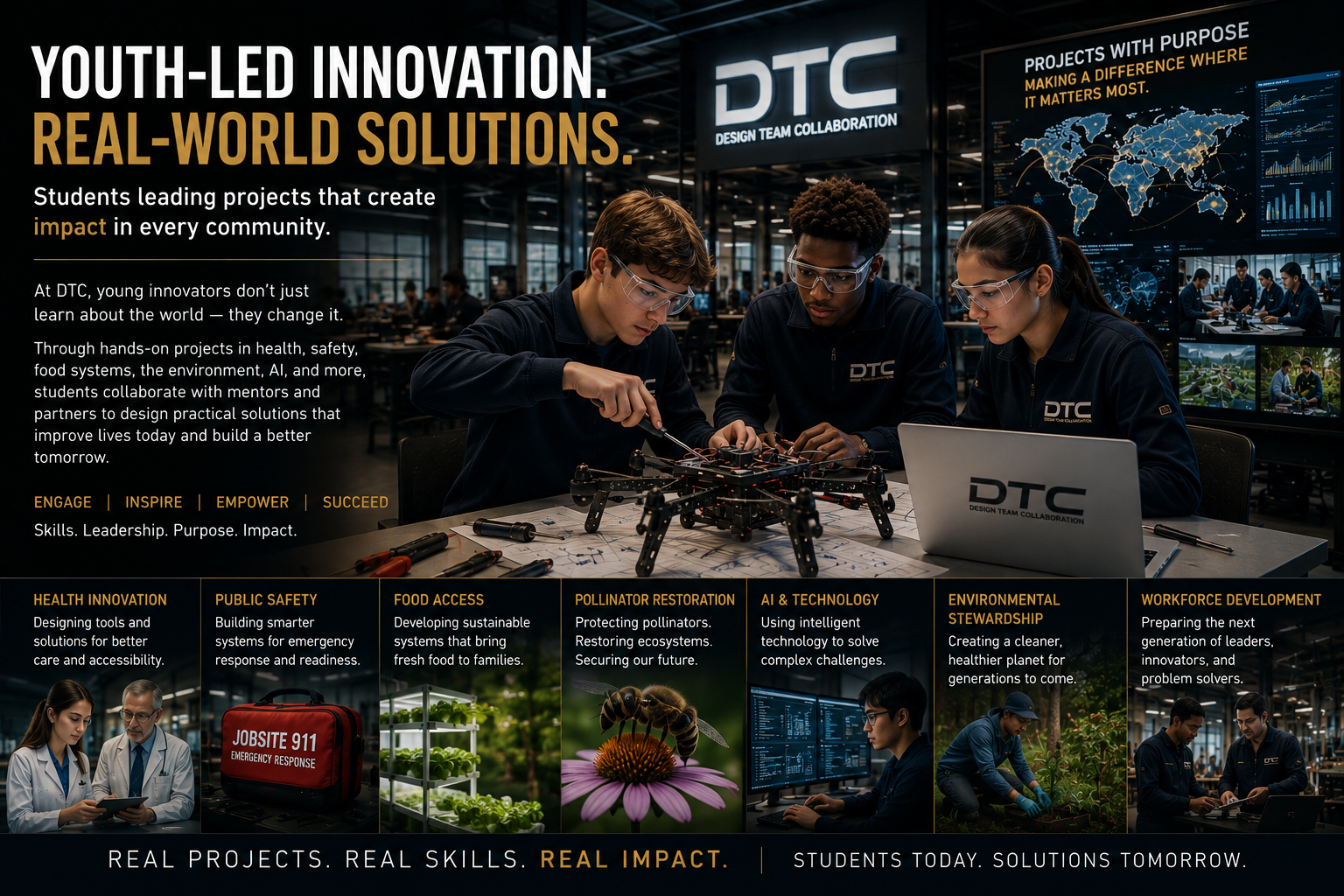
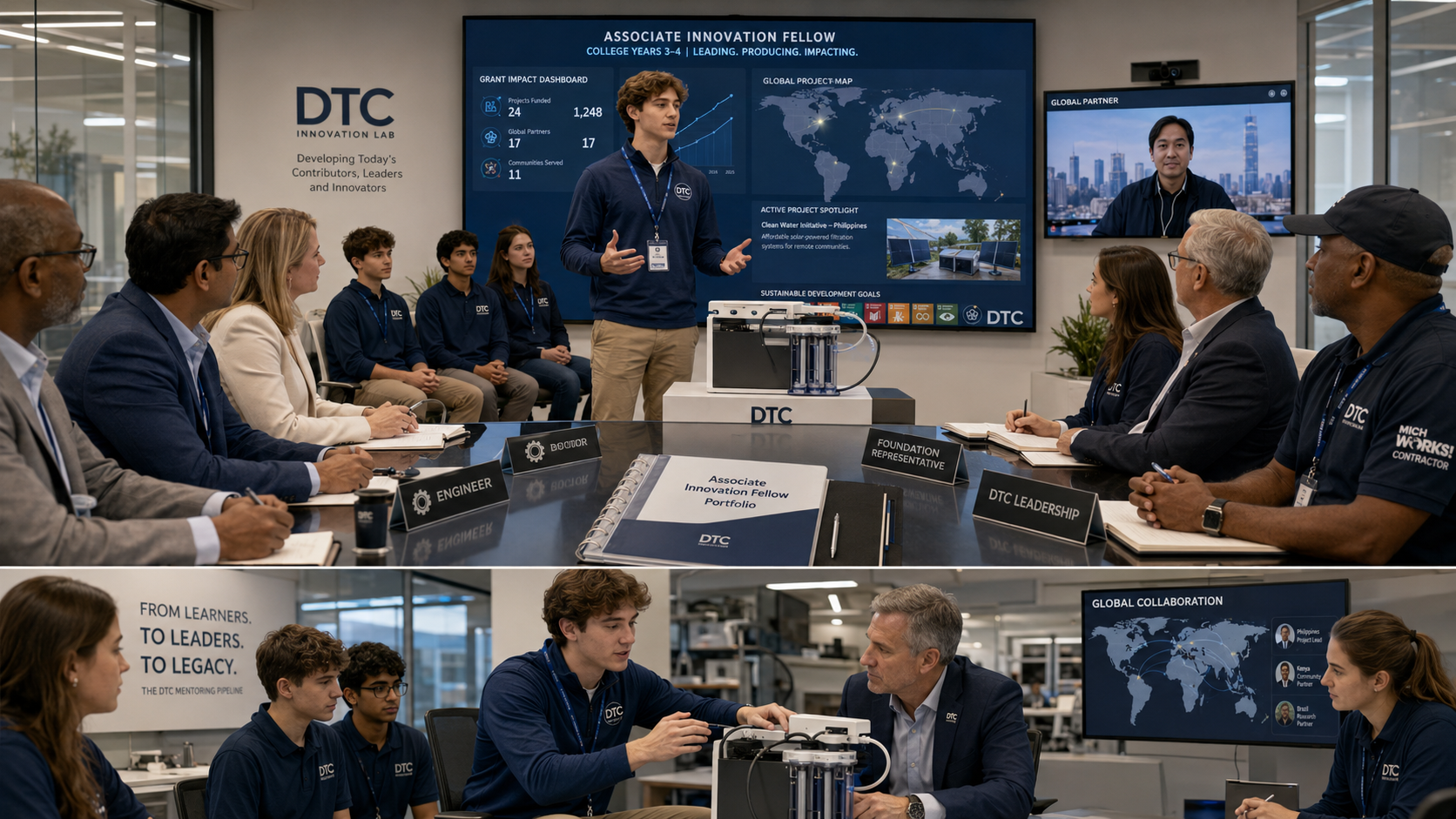
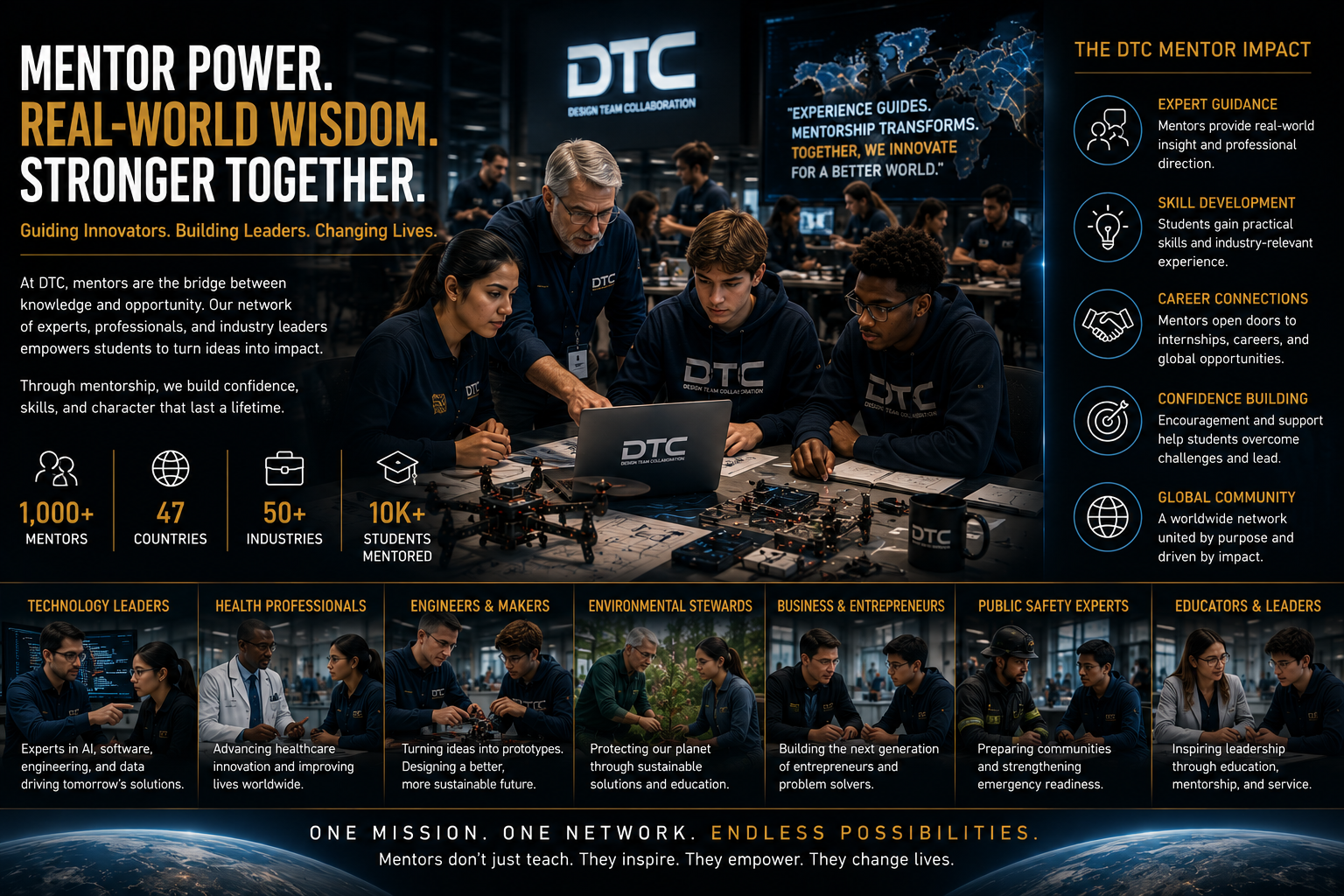
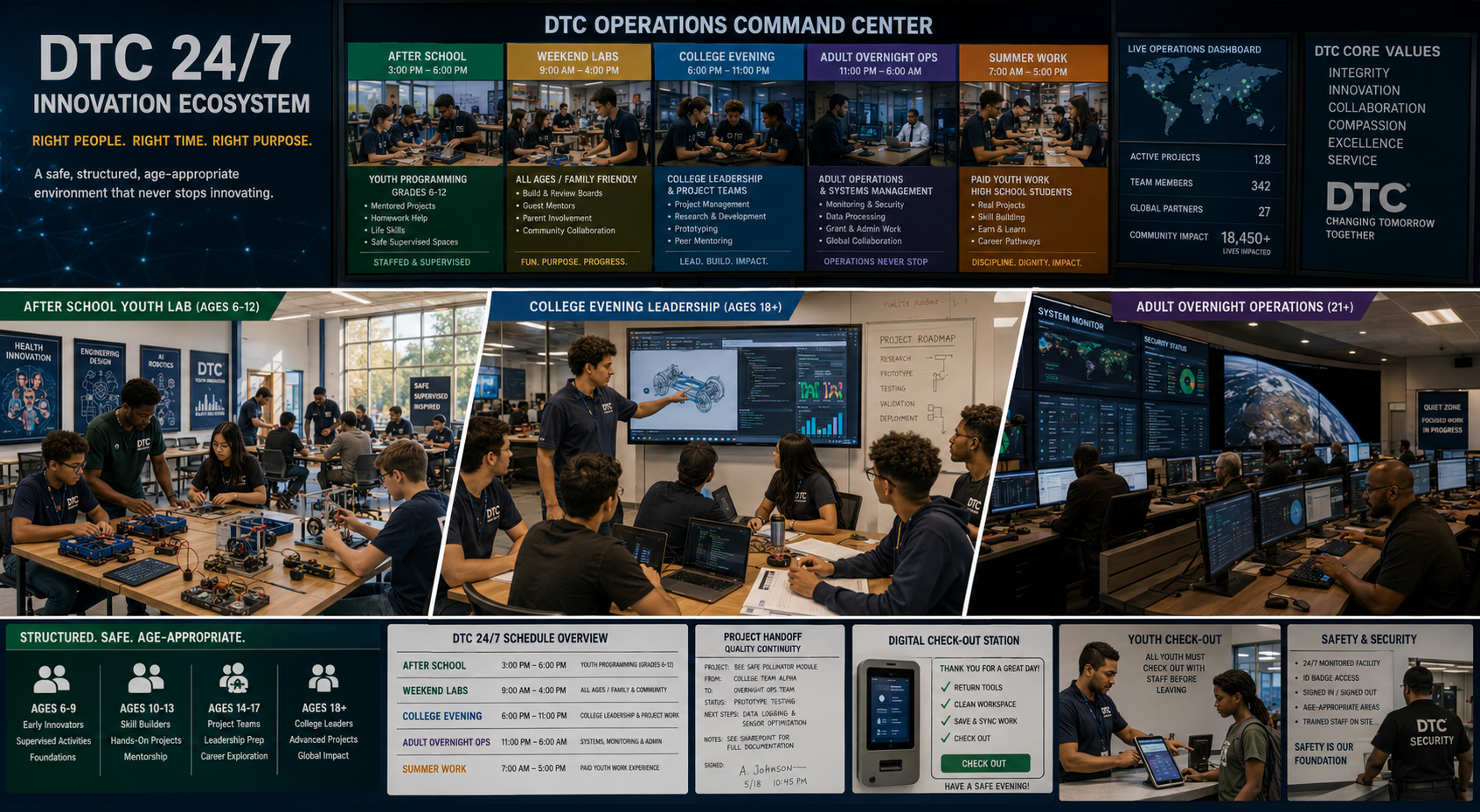
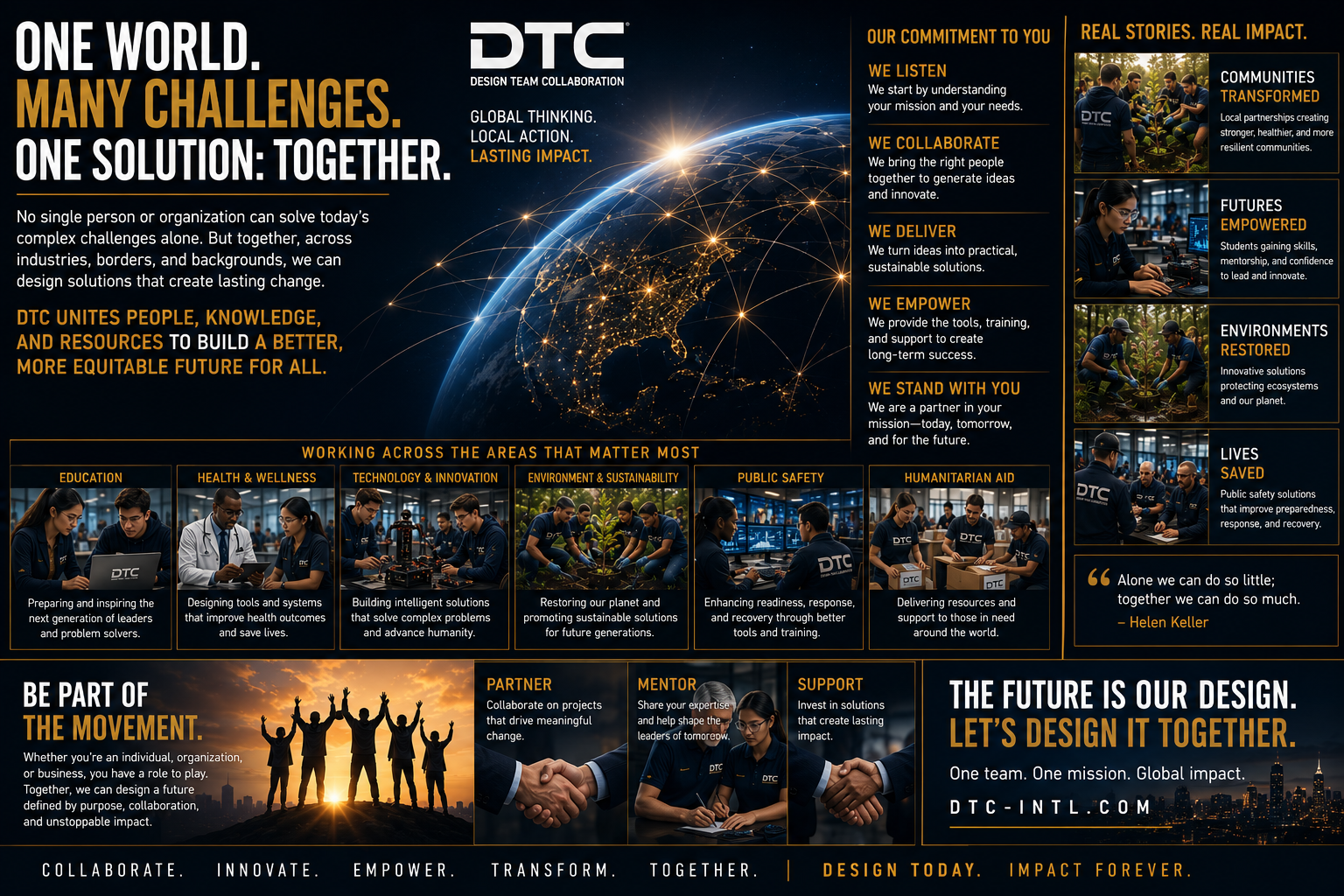
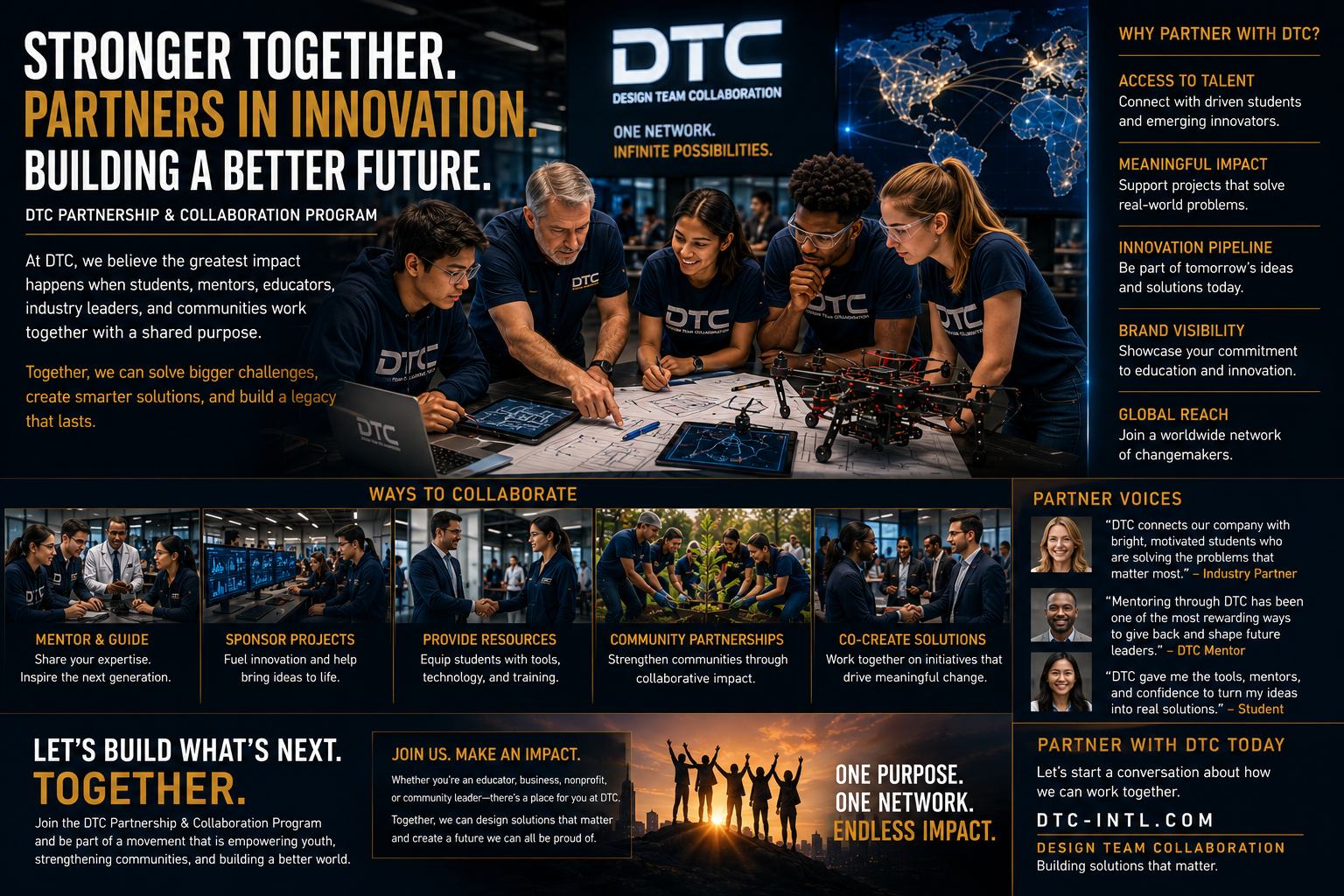
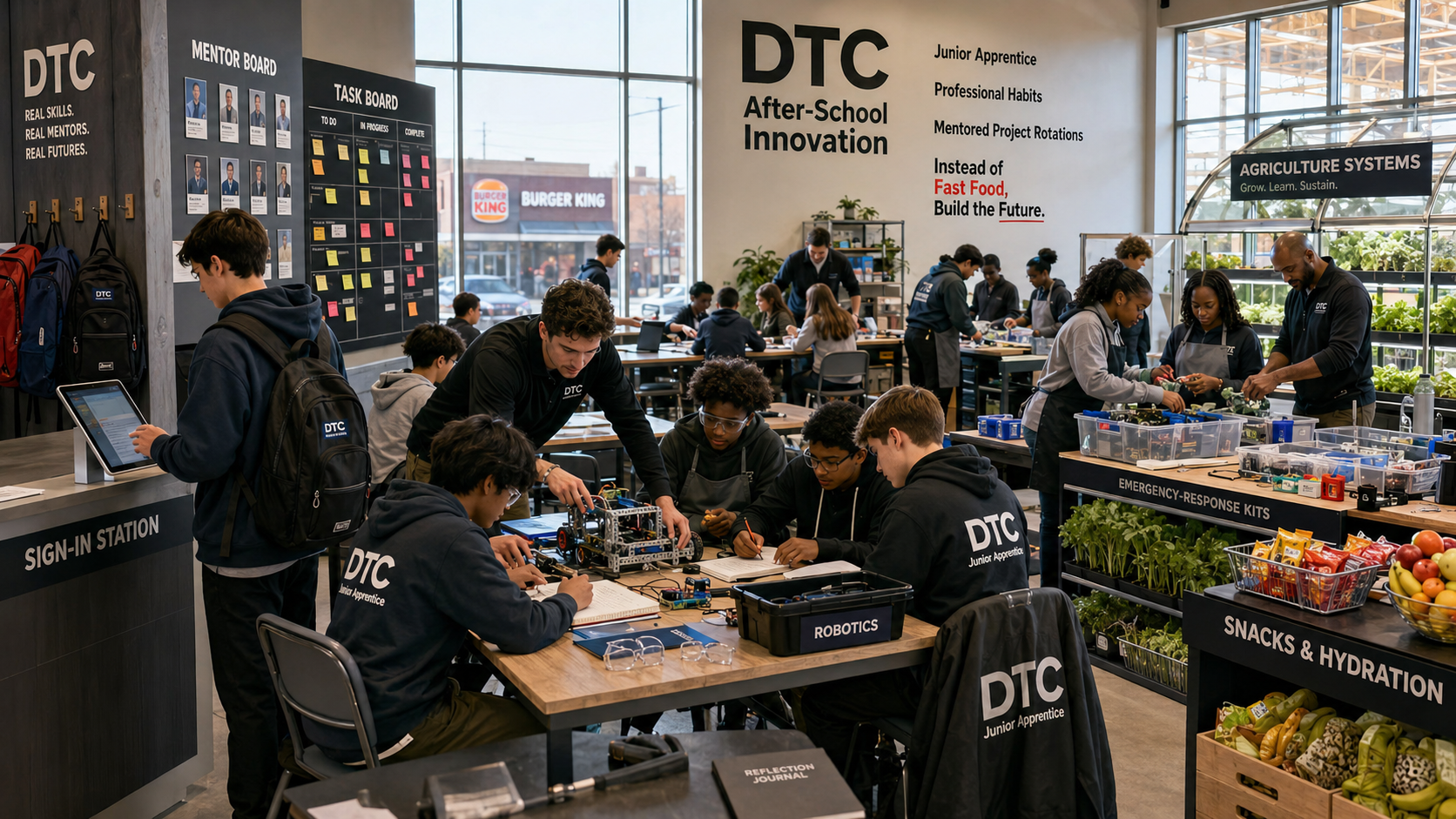
Curriculum Dynamics does not operate in isolation. It sits inside the DTC International design-team collaboration — a structure that connects Midlink-ICC, the Machine Design Network, and the Innovation Without Walls mentoring pipeline. This page explains how the organization is built, how programs are designed and funded, and how an idea becomes a credentialed program students can enroll in.
Organizational Structure
- DTC International — the parent initiative, est. 1997, anchoring the design-team collaboration
- Curriculum Dynamics — the education and credentialing arm that packages programs for schools and employers
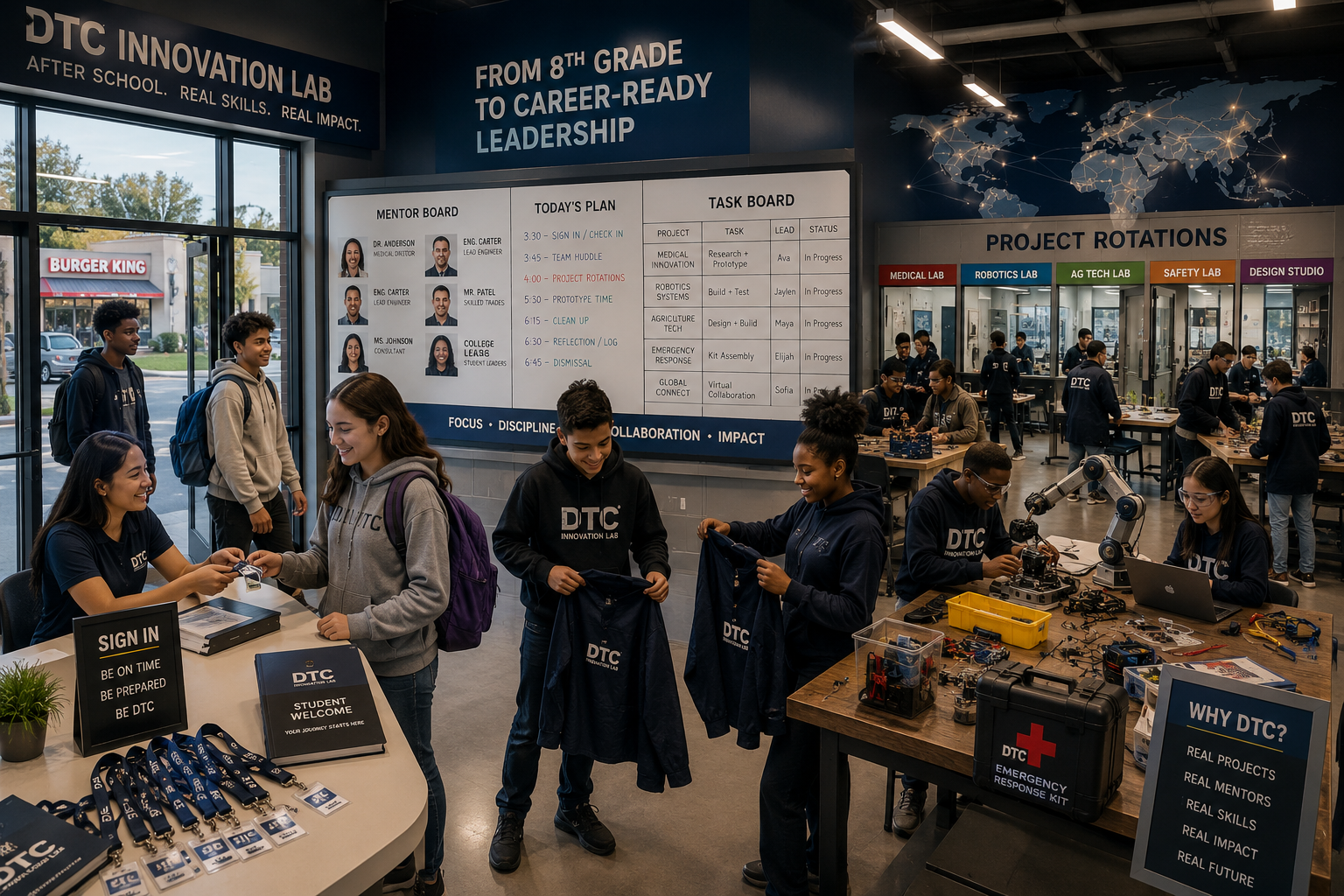
- Midlink-ICC — the International Collaboration Center that hosts labs, mentors, and real project work
- Machine Design Network — the engineering partner that supplies technical curriculum and product pipelines
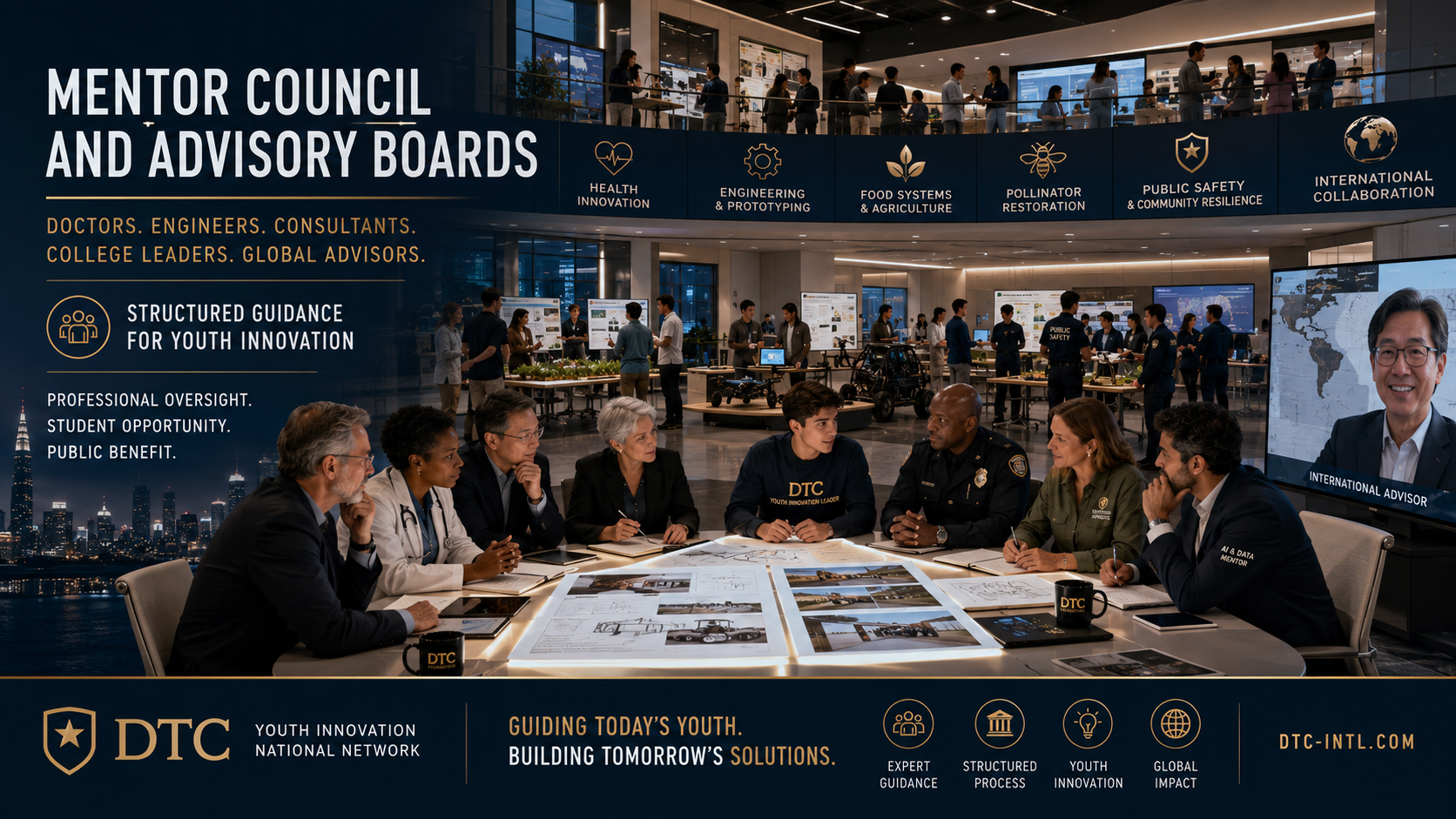
- Advisory and mentor network — industry experts, board members, and community partners
Programming Model
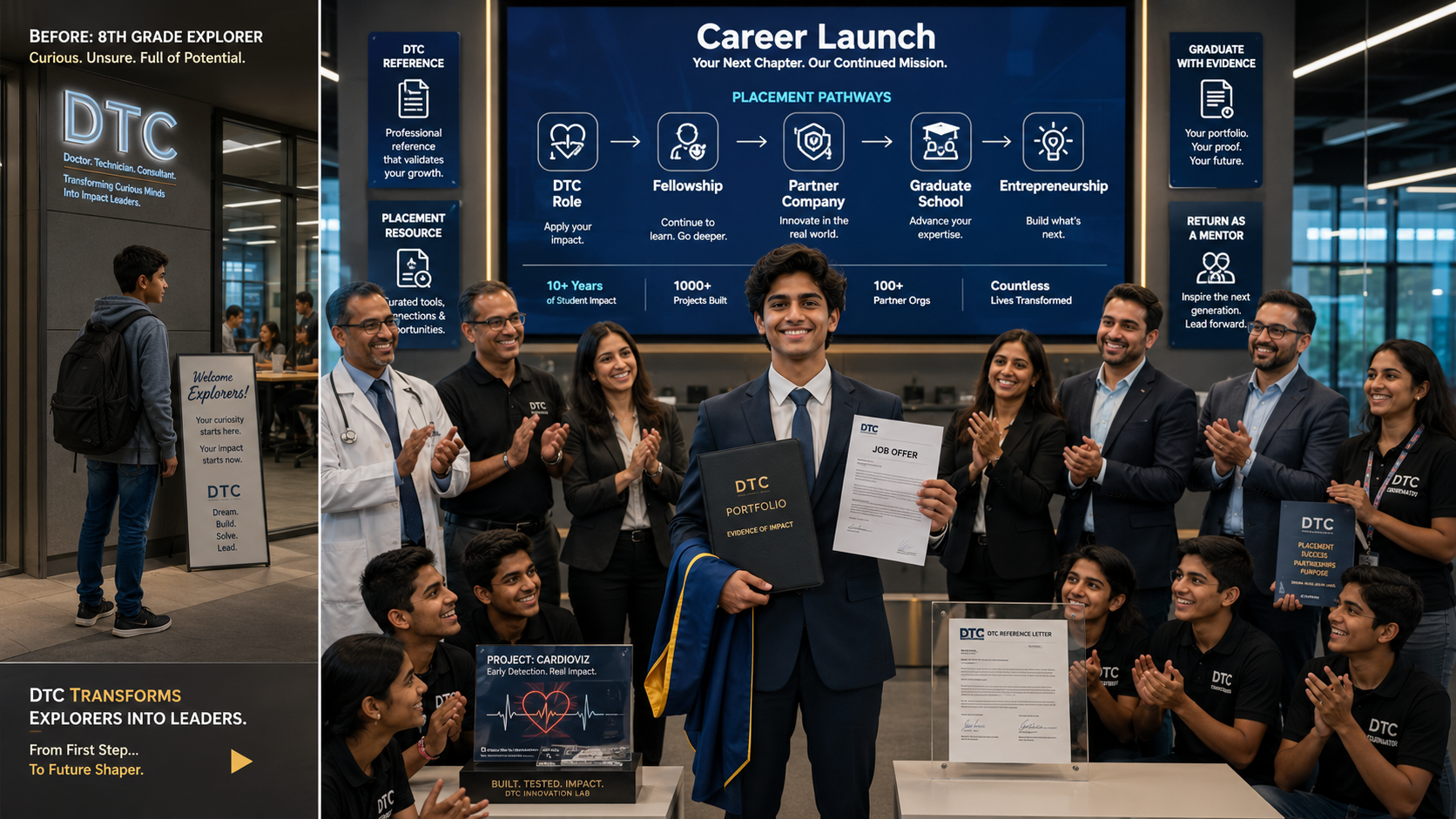
- Concept — a workforce gap or emerging trade is identified with employer partners
- Design — curriculum is co-authored with engineers, educators, and the mentor network
- Pilot — a small cohort runs the program with real projects and measured outcomes
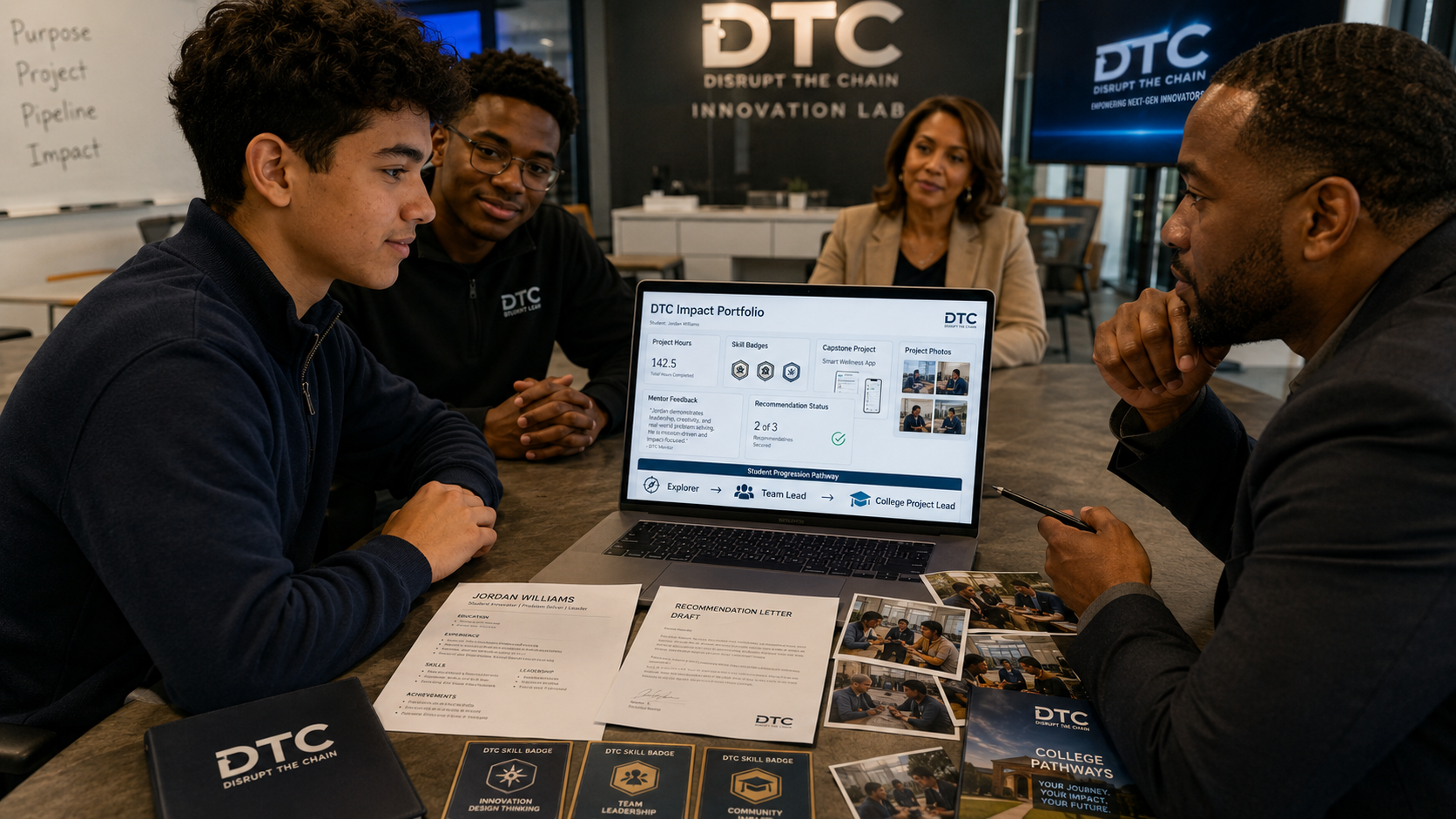
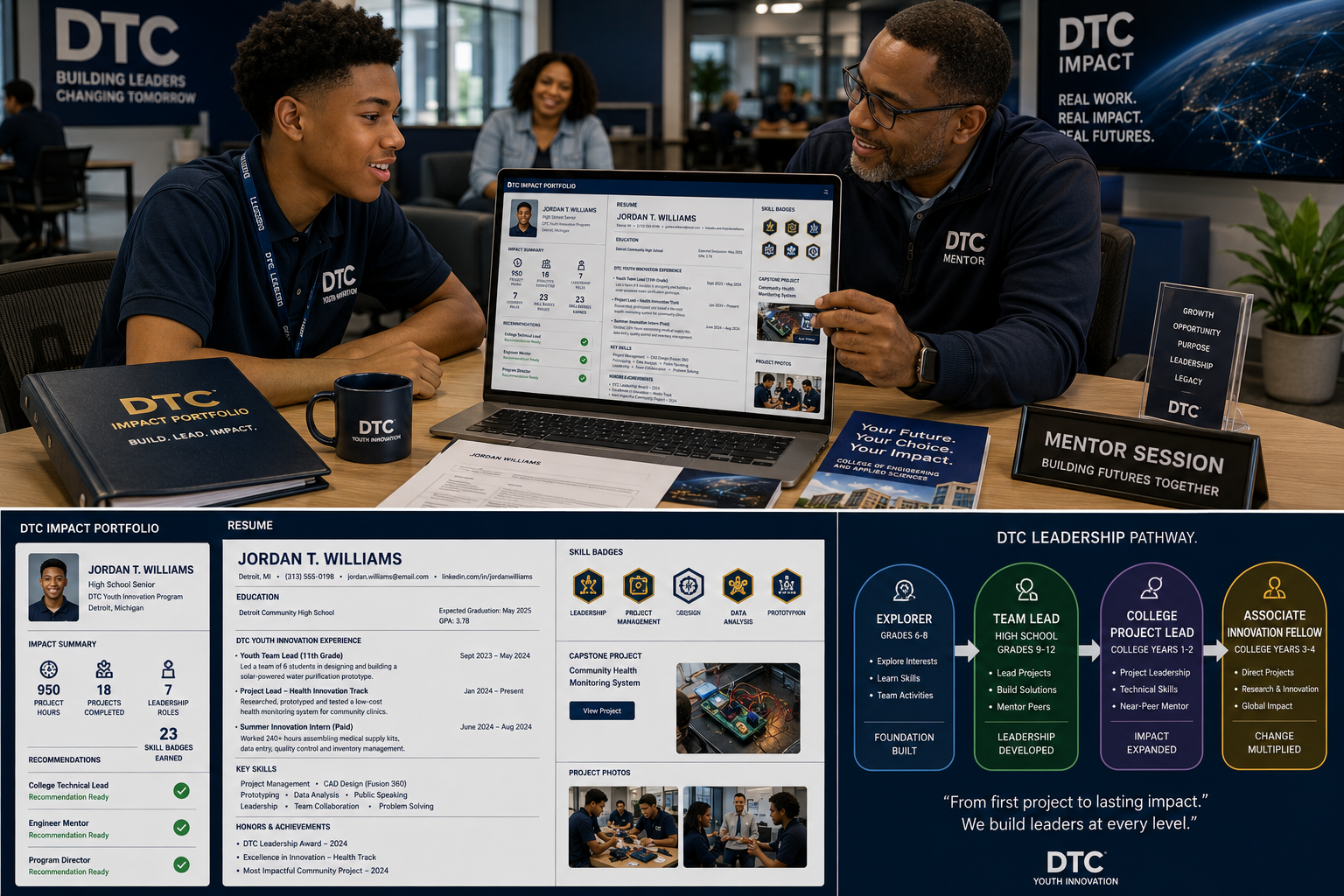
- Credential — competencies are mapped to skill badges and articulation agreements
- Scale — the finished program is licensed to districts, colleges, and employers
Funding & Partnerships
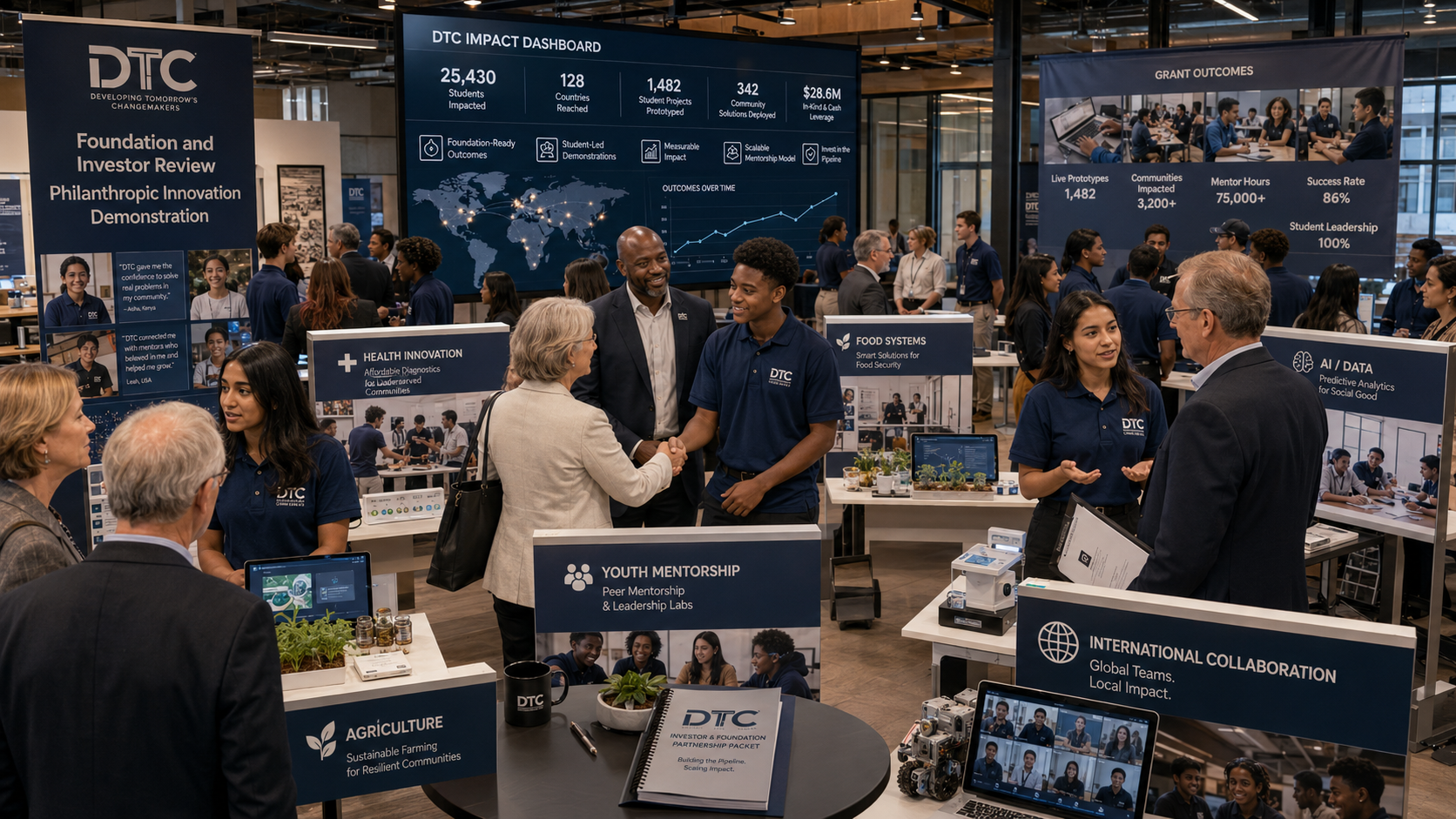
- Employer sponsorship of apprenticeships and cohort seats
- Workforce development grants (Michigan Works, WIOA) for eligible students
- Philanthropic funding for student stipends and program expansion
- Curriculum licensing revenue that sustains ongoing program development
Start the Conversation
Ready to bring Corporate Structure & Programming to your school, district, employer, or program? Contact Curriculum Dynamics.